Regrets Have One Purpose

text on shelf

Regrets should only ever serve one purpose in our lives. To help us learn something and make changes for future decisions.

Many of us go through life filled with regrets. The should have, would have, could have thoughts dominating our thoughts. The what ifs and I wish thoughts consuming our minds.

These thoughts generally only lead to one place. Negative feelings about ourselves and negative thoughts that come with those feelings. We can sink into the quicksand of self blame and living in the past.

If we allow ourselves to have regrets at all, we should be sure that coupled with the should, would, could, what if and I wish we have the what can I do differently going forward. How can I work to not repeat this choice or behavior in the future.

This is truly the only positive purpose of regrets in our lives.

We should also strive to have very few regrets. Regrets are a result of an inability to accept what has already occurred. To know that there is no changing the past and that living there does nothing to move us forward.

But we are human and as such we will sometimes have regrets that make their way into our daily thoughts. These are the ones that need to serve a purpose. A path to knowing better so we do better.

when we know better, we can choose to do better.

Regrets can be all consuming if we fall into their negativity and wishing we could change the past mentality. We can find ourselves stuck in wanting to undo what has been done. Beating ourselves up for choices and decisions we made at the time. Feeling as if we are a failure every day after these choices are made.

We only fail when we do not learn. We can turn regrets into success by knowing our regrets and doing better when we have the choice now.

You do not have to live in a world of regret and self blame. Learn, grow, know better, do better.

Every regret is a chance to learn something and apply that lesson to our lives going forward.

Pick Your Battles

two white and black chess knights facing each other on chess board

Some days it can seem that all we do is fight battles. With ourselves, with our thoughts, and with others. These battles can be years long or new occurrences. Some may be worth fighting but some may be better let go.

The battles worth fighting are the ones that are going to keep us safe, mentally and physically, or those that are going to improve our lives. Battles to no longer be abused are worth fighting. Battles to change negative thoughts and behaviors we have are worth fighting. Battles to replace negative or destructive habits with positive ones are worth fighting. Battles to make our lives better are worth fighting.

These battles, even though they benefit us, are still sometimes very hard to fight. Especially if we have had years of conditioning that have made the life we currently live become normalized. Even if it is destroying us, we may still feel it is normal, for us.

There are also battles that are not worth fighting. The battles that are not winnable. The battles that cause us more harm than good. The battles that make our lives worse instead of better. These battles we should work to let go.

The battle of believing someone we love who hurts us will change someday. The battle of holding onto toxic relationships because we do not want to be alone. The battle of continuing negative thoughts or anxious worries always thinking about the next calamity or what we hate about ourselves. The battle of always needing to have control over everything and everyone, which is a false sense of security.

The battles we should let go of are those which negatively impact our lives and are not winnable. They are like whirlpools that go around and around and around but get nowhere. They are the battles where we walk the same ground over and over never moving forward. These battles are never about progress. They are only about negative repetition.

Practicing and learning to let go of these battles is also a process of repetition, but this repetition is positive. It is forward moving. It is not covering the same ground. It is not spinning around the whirlpool.

It is making change. Stopping the negative and choosing positive. It is refusing to continue doing as we have always done. It is about making our lives better, healthier, stronger.

Some battles are worth fighting. Some battles are not. Pick your battles and fight on to a better you.

Until next time,
Deborah

Bring Your Goals Into Focus

green typewriter on brown wooden table
Photo by Markus Winkler on Pexels.com

I have long been an advocate for my clients to use writing as part of their therapeutic process. Writing not only incorporates our emotions but seeing things in writing also holds a form of accountability and truth.

Writing things out that you want to change, that you want learn to accept, that you want to understand, that you want to create makes them tangible and real. Words flowing on to paper offer emotional transference and a reference of who we truly are. We can know ourselves better and on a deeper level by writing about all the parts of our lives – past, present, and future.

I recently discovered an amazing journal that allows not only the writing of emotions and experiences, but also allows for goal planning and accomplishment, habit forming and reinforcement, and vision for the present and future. This journal was found on Amazon and I have no affiliation with Amazon or the maker of this journal, however I highly recommend it. The Phoenix Journal is a three month exploration of many parts of oneself. It is undated allowing for use at any time of the year.

The journal offers daily planning of schedule as well as key actions, tasks, a place of focus, a place of gratitude, guidance for the day, a place for daily victories and ways to improve. It also offers a blank bullet journal page for each day so that every day emotions and experiences can be recorded and examined.

There are weekly targets and targets for the entire three month span. There are weekly check ins at the end of each week of writing to see how you have done on your goals and actions. At the end of the journal, there is a comprehensive place for reflection.

Building goals and habits takes repetition, reinforcement, and accountability. We can make all the goals and plans in the world, but if we never question if they have been accomplished the result is only thoughts or words. A journal like this offers us a place of vision, of gratitude, and of self examination along the way.

I am sure there are many similar journals available, but this one has personally allowed me to establish goals, lay out a vision, and reflect on both myself in the past, the present, and the future. Perhaps it could be of help to you as well to bring your goals and yourself into focus.

“The successful warrior is the average man with laser-like focus” ~ Bruce Lee

The New Normal

question mark on yellow background

Every day, many times a day, the phrase “the new normal” is spoken by thousands perhaps millions of people in regards to what happens after the coronavirus crisis. But even as this is said, it is almost immediately followed with the phrase “I don’t know”.

And here is where the issues start for most people. I don’t know is a phrase filled with uncertainty just as much of this situation is. There are so many questions that cannot be answered.

There are a lot of maybe answers. A lot of possible answers. A lot of if this happens, then this is the answer but if that happens, then this is the answer. There is no certainty, no knowing.

And this is a very scary place for the human mind to live.

Human beings want certainty. They want answers. They want safety and security. One of the biggest needs that human beings have is to be able to feel safe and secure. The phrase “I don’t know” does not offer either of those things only the unknown.

When things are unknown it leads to the mind then creating what it thinks will happen, good and bad. In anxious situations and thinking, the mind generally creates what bad things will happen because we don’t know and we have no control over the outcome.

Worst case scenario, catastrophes, predicting the future, all of these and more become where the mind goes. These anxieties build on themselves and in short order we are overwhelmed with anxiety about every aspect of our lives.

It is tremendously difficult during times like these to find space to stop and really think about how our anxious thoughts are affecting our lives, our choices, our emotions.

But stop we must or be overtaken with fear.

The way to confront these thoughts is to stop with every single one and ask the question, what is going on in my life right now that is true. Not what I am creating or imagining, but what is actually happening right now. Do I have a place to live, do I have food, is my family safe. These are the basic needs for safety and can calm many other fears once we acknowledge that we have this security.

Every anxious thought must be confronted with the lens of truth. If we are creating coming catastrophes with our thoughts, we must ask are they true right now this moment. If they are not, we must then replace them with what is true in this moment. We cannot predict the future, no one can, we must live in the right now. And only the right now.

There is no good that can come from anxious living and thinking. That is something we do know.

It can be difficult to confront anxious thoughts as they can quickly go from one thought to a mountain of thoughts. We must start with the first thought and confront it. Then the next, and the next, and the next. Repeat and reinforce the truth not the unknown.

Things that we do not know can only hurt us if we let them, if we give them power. The truth takes their power away and keeps our mind from being overwhelmed.

The new normal is to stay in the right now and live in the truth.

The Anxiety Of Reopening

woman in gray coat wearing white face mask

Throughout the Covid-19 virus crisis, anxiety has been a part of the lives of many. Even with the shut down orders in most states, many people are still anxious about their own health or the health of friends and loved ones.

People have been anxious about their education as schools are closed. More have been anxious about their jobs as employment has also been shut down for many people. Still others are anxious about loss of income and paying their bills.

There has been anxiety over supplies such as toilet paper and hand sanitizer. Anxiety over relationships as being at home with others all the time can be very stressful and in some cases even dangerous.

Some states are now beginning phased reopening. Some businesses are being allowed to reopen with guidelines. People are starting to come out of their houses in much greater numbers. The traffic in stores is increasing daily. Some people are being allowed to go back to work.

This brings fresh anxiety to many people. Will it be safe to go out? Will my family and friends be safe if they go out or if I go out and come back to them? Will I be protected in my work environment? Will reopening cause cases of the virus to go up?

All of these things are unknowns.

As so much of this virus is, unknowns are a huge part of this crisis. From the symptoms to when will things get back to “normal”. No one has all the answers and in some cases they have no answers at all.

This is all very difficult for humans. We do not enjoy unknowns. We want answers. We want to know. When this is not possible we get anxious. Reopening is just the latest in a long line of unknowns that can cause anxiety during this crisis.

So what can we do? Concentrate on what we do know, however little that might be. Concentrate on what is going on in our lives right now. Are we going back to work? How will that be managed? What can we do if we do not feel safe going back to work?

Concentrate on what we know right now for our friends and family. Are they healthy? How can they continue to be protected?

Stay focused on what is going on in the right now moment. Not on what you do not know and what no one can give you answers to.

You can also work to lower your response to anxiety. Meditation, deep breathing, exercise, journaling, hobbies, and other forms of self-care to continually train your mind and body to relax. Let go of negative or anxious thoughts by writing them or practicing the cloud technique of watching them float by and replacing them with positive or relaxing thoughts.

In this new world of unknowns the possibly of anxiousness seems to be lurking everywhere. We can work to avoid giving in to it and allowing it to overtake our emotions. We can’t have all the answers, but we can practice staying in the present moment with what we do know.

Counseling Is Still Open

person writing on notebook

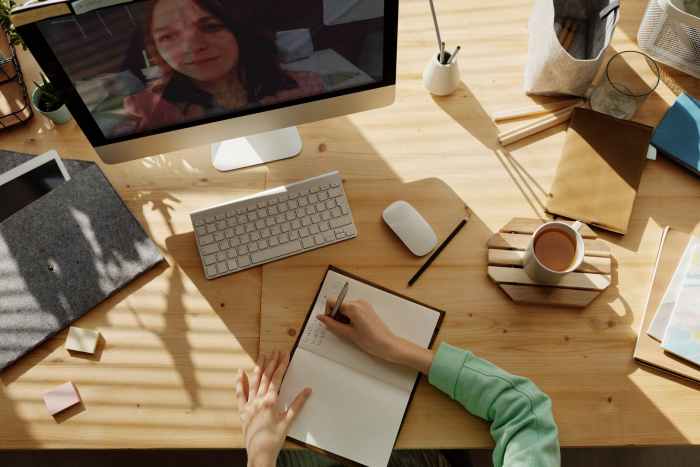
While much of the United States is closed or in some other way restricted, counseling is still open. Albeit in different form than many are used to, but it is still available.

Most therapists have gone to a video model of counseling during this crisis. There are some who are still seeing clients face to face, but that is becoming fewer and fewer during this time.

The video model is a workable option for most clients, but not all. Some do not have stable internet access. Some are not technologically familiar. Some do not feel that video counseling provides the same experience. And some have home issues that prevent confidential and safe environments for video counseling.

Most of my clients have continued therapy through video counseling during this time. I have about six who have not for various reasons. Video counseling is not the same as in person in that it makes it difficult to do some therapy modalities and with clients at home it can be difficult for them to have a session that is not interrupted by family members in some way.

But we continue on as therapists trying to at least provide support for our clients who are struggling with fear, anxiety, depression, job layoffs and losses, kids being home and needing help with their school work, relationship issues due to strains of finances or just being together 24/7, and many other issues.

Even if the traditional forms of therapy cannot be provided at their fullest and most complete, having someone to talk to can make a huge difference.

Offering tools and tips for how to manage anxiety and depression, communication, issues with the kids or other family members, and practice their own self-care are vitally important. This can be done via video counseling.

In my own practice, I have noticed a significant decline in the number of people reaching out to begin therapy. I have to wonder if some people think therapy is not going on because you are not supposed to see people in person. But therapy is still available. Therapists are considered essential workers and all therapists I know are providing therapy still either via video, phone calls, or even in person where I live.

If you are struggling and think that you could benefit by talking to a therapist during this time, please reach out. I have limited openings at this time, but there are openings and many of my colleagues also have openings.

It may not be the traditional in person therapy people are used to doing or expecting, but it is still therapy and it is still available. Reach out.

Until next time,
Deborah

Stay On Schedule

gold ipad beside stylus

Every day there is a new article or news report about the most important thing we can do during this virus crisis. From distancing to mask wearing and everything in between. However, there is one thing that is being overlooked and which I think is extremely important.

STAY ON SCHEDULE

All of us, from children to adults, are used to a schedule of some kind. Whether the schedule is for work or school or even the schedule you had if you were already staying at home before this crisis happened. Most everyone has some kind of schedule.

In having this schedule, your brain and body become used to doing things at a certain time. They become accustomed to responding to the need to work, eat, play, sleep at regular intervals. They become conditioned to this is the time and at this time this is what we are supposed to do.

Keeping a schedule when everything you kept a schedule for has been turned upside down is very difficult. It is very easy to slip into pushing the conditioned schedule responses away.

We stay up later watching movies or playing video games. We sleep in later as we realize there is really no where we need be in the mornings. We skip meals or start “grazing” or eating in passing of whatever is available. We stay in our pajamas and routine hygiene can become less and less.

This all may seem quite liberating at first. No demands or pressures to get up at 6am or be in class or at work by 8am. We can choose Netflix or Hulu and lie in bed all day long. Sounds like what we may have longed for all those days we were bound to the schedule.

Very soon after, however, our brains and bodies start to react to the lack of schedule and routine. The brain becomes sluggish. As if it’s not really awake. The body starts to feel tired even if we are sleeping more. We have body aches and pains from all this new laying about for hours. We start to feel sad and then possibly irritated or both. And we long for our past schedule and the activities that go with it.

It is especially true for younger people and children. Their need for structure, routine, and schedule is even more pronounced. Without it, they fall into boredom, sadness, irritation and are less able to self-regulate their emotions, which leads to outbursts of anger or tears.

When you add on possible fears of getting sick or having someone in your life who is sick and then add on possible job losses and financial issues, this can increase the body and brain’s response to lack of schedule.

So, how do we manage this at this time in our lives? We must make every attempt to stick as close as possible to the schedule we had before this event started. The brain and body need it. We need it. Yes there can be some leeway or stray from the 6am alarm time, but it should not be more than a couple of hours at most and the same for bedtime. Eating should be monitored so as not to stress eat or eat poorly. Hydration should be kept up. Getting outside should be scheduled in.

You can make a new schedule with different activities due to the way things must be managed during this time, but you can make a schedule and stick to it.

Believe me, your brain and body will thank you for it. You will feel better and your emotions will feel better. And it is not too late to start if you haven’t been doing it thus far. Today is a new day and your schedule can begin again.

Until next time,
Deborah

Get Some Sun

sunshine

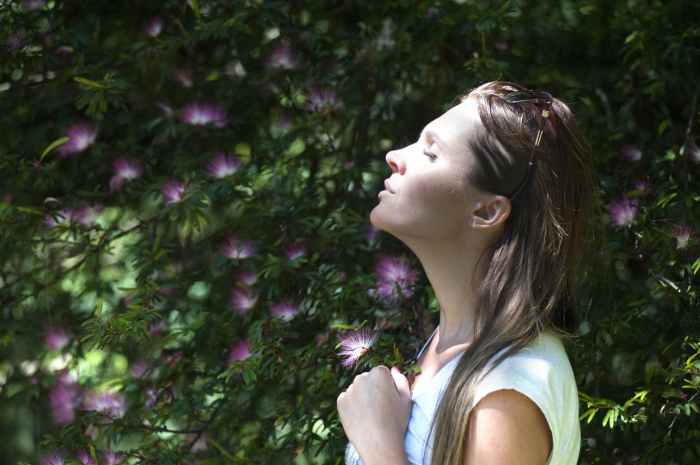
Social distancing does not prevent us from going outside. It just helps us not to congregate together. Going outside is essential to physical and mental health and even more so during this time.

Most of us are spending a lot of time at home right now. We are finding it difficult to keep on a schedule. We are consuming a lot of streaming shows and videos. We just are not getting out much in some cases.

Our bodies and minds need the outside and they need the sunshine and vitamin D. During this time of staying at home, it does not mean we cannot go outside and get some sun. There are many ways to do it and the benefits are invaluable.

In northern climates, it is even more important to get out and get some sun due to the fact that there is less exposure during the winter months. Increasing your intake of vitamin D can also be helpful, but being in the sun is still necessary.

Recently in Montana, we had some snow for a couple of days. It was cold and the sun wasn’t out and many people I talked to felt very down during those days. The sun is out now and it is beautiful outside, and we need to be outside too.

Even if it is just to go out into your own yard or on to your own porch for an hour or two. Going on walks on paths and trails or bike rides in the sunshine. Walking around the block of you neighborhood a few times. Or just getting a lawn chair and sitting in your driveway in the sun.

It does not matter how you get out and get sun just that you do. Your mind and body will feel so much better and brighter just like the sun itself. Even a few minutes can make a big difference.

Remember to keep your distance with others when you are out, but go outside. Staying in the house all the time during this crisis is not helpful. Social distancing does not mean complete isolation. We need to still be social in the ways that we can and we need to be outside as much as possible when the sun is out.

Go outside today. Get your family outside. Soak in some vitamin D and be mindful of the beauty of the coming spring and change of season.

Go outside and get some sun. Your mind and body will be grateful for it and your spirits will be lifted.

Until next time,
Deborah

Calm Your Worries

adult air beautiful beauty
Photo by VisionPic .net on Pexels.com

In times of uncertainty and increased anxiety, our worries can increase with out fears. With each added worry or fear, we can find ourselves feeling overwhelmed and in some cases unable to do even the most basic things.

The first step to calming your worries is acknowledging they exist. Many times, we think it is easier to ignore or deny or dismiss what it is we are afraid of or worrying about. This might work temporarily but the worries present themselves again at some point and in usually greater numbers.

Sometimes we use behaviors to distance ourselves from the fears or worries. By using substances or sleeping all the time or becoming irritated and taking that frustration out on others around us. But still we are not recognizing the fears and worries for what they are.

Confronting fears and then truthfully analyzing them is the only way to take away their power. Monitoring the truthfulness of the fears or worries. This can be done in a variety of ways.

Keeping a journal of your fears or worries. Writing them down daily. Coming back to them the next day to see if they actually came to pass. If they did not, then it helps to reinforce that they are not true and are a creation of your mind. If you do this repeatedly you will find that your mind starts to dismiss the same fears or worries because you have already shown it that they are not going to happen.

There is an app also that can help with managing fears and worries. It is Worry Watch. The app helps you keep track of your fears and worries and also helps you to track the truthfulness of them. There are also positive affirmations and other tools for reinforcing new thoughts to replace you fears and worries.

In times of uncertainty, fear and worry seem to grow rapidly. It is important to face them, apply the test of truthfulness to them, and replace them with different thoughts that are true.

Take some time today to get ahead of your fears and worries before they get ahead of you.

Until next time,
Deborah

The Importance Of Self-Care In Isolation

man standing beside window
Photo by Jose Antonio Gallego Vázquez on Pexels.com

Self-care is an important practice at all times, but now even more so during these periods of isolation. With so many things on our minds during this time including care for others, worries about jobs and bills, children home from school, not being able to get supplies, our own self-care can fall by the wayside.

Isolation for those not used to it and even for those who are who feel even more isolated can result in an increase in mental health issues such as anxiety and depression.

It is very important to keep up your self-care routine as much as possible or to start doing self-care on a more regular basis while isolated. Many of our self-care options are being limited by social distancing such as gyms, movies, massages, restaurants, etc. We can find that many of the things we did for self-care before are not available to us now.

That is when we have to find new ways to care for ourselves in the confines of our current situation. If we do not find these outlets for our anxiety and depression, we may find ourselves sinking further into despair and worry.

Here are some ways to practice self-care at home during this time:

1 – Writing. Starting or continuing a journal. Writing poetry. Writing short stories. Getting emotional transference through writing.

2 – Meditation. Continuing or starting a meditation practice. Calming your mind can go a long way to calming your life. Apps like Headspace, Calm, Worry Watch, and more can help you in this meditation process.

3- Art. Painting, drawing, crafting, creating and any other art related activity can inspire creativity, promote the release of dopamine and focus your thoughts on what you are doing.

4 – Games. Playing games can be very helpful during this time. If you have kids at home playing games with them or playing games by yourself on your phone, computer, or gaming system. I wouldn’t recommend doing it nonstop but every now and then offers a good break in the routine.

5 – Organizing. Taking a room of your house one at a time and organizing, managing clutter, and tidying up can not only help your home space but your mind space as well.

6 – Schedules. Having a set schedule for each day regardless of if you can go out of the house or not. A time to get up, make breakfast, work on tasks, do self-care, etc. If you have children, a schedule is necessary to continue providing structure and routine which they desperately need.

7 – Get Outside. Even if you cannot go to places you normally would, you can go outside your house. Even if it is just to sit outside in your yard in the sun, it will make a HUGE difference.

8 – Exercise. Do some kind of exercise. Even if it’s just stretching. Yoga, walking around your house, anything to get you moving and get those endorphins and dopamine going.

9 – Humor. Don’t get trapped in the gloom and doom of the news, social media, and your fellow man. Find some humor. Find ways to laugh, a lot. Funny videos, movies, comedians and things like this are all ways to have a good laugh.

10- Therapy. If you go to therapy already either keep going in to the office if possible or see if your therapist can offer telehealth (video sessions). If you feel you need to see a therapist do the same thing, go in or see if they offer video. Your mental health is important too.

These are just some of the things you can do during this time of isolation to take care of your self-care. Don’t stop taking care of you.

Because you matter.

Until next time,
Deborah