Begin With The End In Mind

Photo by Mehmaz Taghavishazi on Unsplash

Begin with the end in mind is habit number 2 in Stephen Covey’s book The 7 Habits of Highly Successful People. We must have the end in mind in order to successfully navigate your goals.

It is unlikely that we would start building a house without a plan or at the very least a rough draft of design ideas. Why should our lives be any different?

If we do not consciously have a plan for our lives, we give the power to shape our lives to other people and other circumstances. Instead of being the hammer, we become the nail being forced into whatever someone else’s will or the force of other circumstances desires.

So how do we begin with the end in mind? We construct a personal mission statement. A blueprint for the building of our lives so that we are the hammer.

To start a personal mission statement, we must carefully, deeply examine what values, beliefs, and morals are. What is it that we want our lives to truly represent?

To fully understand that question, we must look very carefully at all the roles we play in life. There are many and over time they also change. A personal mission statement will also change based on the roles we are filling at the time. Some of those roles might be spouse, parent, child, sibling, entrepreneur, employee, writer, teacher, counselor, friend, etc. Whatever roles you fill in all aspects of your life.

Now take those roles and find the five most important ones in our lives at the moment, and this can change as time goes on. Write out what values we want those five roles to embody. The highest-level purpose for each one. The things we would want the people affected by those roles to say about us when we are dead. Be idealistic but always focused on aligning each role with our values, beliefs, and morals.

Refine each one, make them simple and concise. Do that for each of the top five roles currently. Put them together in one document and this results in our personal mission statement.

Review it frequently, daily actually. When making big decisions for our lives and when planning out our week. Do the things we are doing and planning align with our mission statement for our defined roles currently? Or are they being shaped by other people and circumstances? Do they align with our defined values and the end that we have in mind?

Keep a copy available to you at all times. Take a photo of it and have it on your phone so that it can be referred to whenever you need. Print it out and have it where you can see it every single day as a reminder to check your alignment.

Remember it is okay and necessary to amend your personal mission statement as time goes on. Roles change, new roles may appear (grandparent, retiree, etc.), different milestones are accomplished. Attune yourself to where you are in every moment and what roles are your highest priority and amend your mission statement accordingly.

In creating your personal mission statement and utilizing it daily, you become the leader and builder of your life. It is you who create your destiny and you who is working toward the future that you want.

Begin with the end in mind, every day.

Until next time, be well,

Deborah

Be Proactive

The first habit of highly successful people

Proactive — adjective — (of a person, policy, or action) creating or controlling a situation by causing something to happen rather than responding to it after it has happened.

The 7 Habits of Highly Effective People by Stephen R. Covey was published in 2004 and has sold over 15 million copies. It is still one of the most highly ranked books for sale on Amazon.

This book has offered millions of people ways to change the way they think, respond, and create success in their lives. The first habit is to be proactive.

Most people are reactive. They skip right over the very few seconds between thought and response where the choice resides. Many believe that they have no choice to make and they are compelled to respond in the way they do.

The responses are attributed to everything from the weather to politics and every possible thing in between. People who are reactive feel that they are not responsible for their reactions.

It is raining and rain always makes me depressed.

Reactive people attribute their responses to things they cannot control. If they could control them, then they would not affect them, right?

Reactive people lack the ability to be response-able. Read that again. The lack of the belief that they are ABLE to respond differently. They are ABLE to choose their response.

All it takes is a very few brief seconds or moments to stop at the thought to make a choice before proceeding to the response. And after you make the choice to respond, being responsible for the outcome of that choice. You decided to respond in that way not to allow something or someone to make that choice for you.

Many people think that their responsive behavior is a choice and that they are making the choice. This is because for years of their lives they have responded to certain things in the exact same way over and over every time. This trains their brains to believe this response is their choice. When it clearly is just a reaction.

Reactive people live in the circle of concern — worry over things they cannot control. Their reactions are to those things they fear they cannot control. By reacting to these things their circle of concern grows bigger and bigger.

People who are proactive go from thought/event to critical thinking (choice) to actively making a choice. Proactive people live in a circle of influence — what things do I actually have control over.

He makes me so mad is reactive. I control my own feelings is proactive.

Building positivity into the circle of influence expands the circle. The more we acknowledge responsibility for our thoughts the more we can choose to control the outcome.

Proactive people decide what happens to them moving forward instead of allowing what has happened to them to keep them stuck. Proactive people realize it is the thought itself that needs to be acted upon not the outside force that is blamed for the thought.

Between stimulus and response there’s a space. In that space lies our power to choose our response. In our response lies our growth and freedom. ~ Stephen Covey

According To Plan

planner

I am a big planner. I like calendars and planners and organization. I like knowing what I have to do on any given day and knowing what is coming in the future. Without this organization, I could not manage all the clients I see and other things I am involved in very well at all.

Pandemics are not friendly to planners. In fact, pandemics cause planners to feel very out of control and frustrated.

Planners during a pandemic often think they can carry on as they always have. School is starting soon and those with school age children who are planners are busily mapping out how the daily lives of all the members of their families will be managed.

Plugging activities and appointments into their master plan for the next few weeks in order to be sure they are organized and that all the family needs are met. There is just one problem – the pandemic can change everything you have written down in less than a second.

All it takes is for a school board or sports body to say that what we did yesterday is not at all what we are going to do today. Or even worse, what we did this morning, is not what we will do this afternoon.

All the planning is now erased. Wiped away with a few words by someone else. We are left feeling out of control and unprepared. How will we navigate this without a plan?

Living in 2020, there is truly only one plan that can work. One where you have an overview of what is available to plan for right this moment and a backup plan in case that changes. We have to be able to flex at a moment’s notice knowing that our only control is in this absolute second of time and what we know right now.

This concept is so hard for planners. It is hard for everyone these days as no one enjoys lack of control whether they be planners or not. But for planners it is so much more difficult.

I have begun writing in my calendars and planners with pencil and not pen or markers. This way, when things change, and they absolutely one million percent will, I can apply a fat pink eraser and readjust. This may happen several times a day, but it can be done.

When erasing the previous plan, I meditate on the thoughts of this was not mine to control, I can let this go, what do I need in order to meet the new or replaced piece of the plan, the new piece may also change, someone else is making these decisions, what do I know right now.

Incorporating into a meditation routine daily the ideas of being in control of only yourself and only in this moment can help alleviate the overall feeling of being out of control. Everything outside of this moment and yourself is out of your control. And breathe with it, abide with it.

I feel your struggle fellow planners. I know how uncomfortable you feel. But with a changed mindset and a good eraser, we can get through this constant flow of change.

Anything you cannot control is teaching you how to let go.

Until next time,
Deborah

Growth Is Painful

young boy in jacket holding white flower pot
Photo by Anna Shvets on Pexels.com

Growth is painful. Change, transition, metamorphosis, becoming can all be painful. Moving from who you were to who you want to be can be uncomfortable for you and for others. But growth is the only way to survive and thrive.

Anything that remains stagnant or stuck in place will die eventually. If we remain as we have always been doing the same things reacting in the same ways, we will never grow. And we will certainly never thrive.

If you planted a seed and it stayed in the soil as a seed, eventually it would decay and die in the soil. If you stay in the same place of trauma responses, anxiety, depression, anger – you will not grow, you will not thrive.

But growth is uncomfortable. It causes us to change our responses and this causes others to respond to us differently. Some will respond with encouragement and kindness while others will respond with anger and blame because we are no longer doing what they want us to do.

Growth is painful because it may cause you to lose relationships that are toxic and you may even be alone, for a while. Growth is painful because it takes time and energy to transform ourselves into something new.

Growth is painful because it may cause you changes in where and how you live, where you work, what your goals are, and the things you have to let go of in order to grow. Growth can be scary and yet, it is also beautiful.

To truly thrive, growth is a continual process. Always changing, always learning, always becoming the person you want to be, the person that makes you happy.

In any given moment we have two options: to step forward into growth or to step back into safety. ~ Abraham Maslow

Until next time,
Deborah

Resilience

resilience

A great many people in the world have suffered from childhood trauma. A study in 1995 by the CDC and Kaiser Permanente studied the rates of childhood trauma and the correlation of that trauma and the increase in adulthood of physical, mental, and emotional issues.

The ACEs questionnaire was developed out of this study. (Click the link to find out your ACEs score) There are 10 questions with five related to personal trauma and five related to household trauma. Of the 17,000 people in the study, 87 percent had more than one ACEs (Adverse Childhood Events). Later studies in the US showed that as many as 12% of the people in 36 states had suffered more than four ACEs.

Conversely, the resilience questionnaire was developed in 2006 an revised in 2013 in the belief that people who had a higher ACEs score and then a higher resiliency score might possibly be protected from negative outcomes later in life. Resilience is defined as the capacity to recover from difficulties; toughness.

There has been some controversy over both tests especially in the beliefs that ALL people with high ACEs scores will have adverse negative affects in adulthood or that ALL people with correlating high resiliency scores will not have adverse affects later in life.

Every person is different, every brain is different, every person’s experiences are different and outcomes will not be the same for everyone. However, there is evidence that those with high ACEs scores and low resiliency scores can experience adverse negative effects (physical illness, mental illness, and emotional trauma) in adulthood.

So what is your resiliency score? Here is the questionnaire:

RESILIENCE Questionnaire

Please choose the most accurate answer under each statement:

1. I believe that my mother loved me when I was little.

Definitely true Probably true Not sure Probably Not True Definitely Not True

2. I believe that my father loved me when I was little.

Definitely true Probably true Not sure Probably Not True Definitely Not True

3. When I was little, other people helped my mother and father take care of me and they seemed to love me.

Definitely true Probably true Not sure Probably Not True Definitely Not True

4. I’ve heard that when I was an infant someone in my family enjoyed playing with me, and I enjoyed it, too.

Definitely true Probably true Not sure Probably Not True Definitely Not True

5. When I was a child, there were relatives in my family who made me feel better if I was sad or worried.

Definitely true Probably true Not sure Probably Not True Definitely Not True

6. When I was a child, neighbors or my friends’ parents seemed to like me.
Definitely true Probably true Not sure Probably Not True Definitely Not True

7. When I was a child, teachers, coaches, youth leaders or ministers were there to help me.

Definitely true Probably true Not sure Probably Not True Definitely Not True

8. Someone in my family cared about how I was doing in school.

Definitely true Probably true Not sure Probably Not True Definitely Not True

9. My family, neighbors and friends talked often about making our lives better.

Definitely true Probably true Not sure Probably Not True Definitely Not True

10. We had rules in our house and were expected to keep them.

Definitely true Probably true Not sure Probably Not True Definitely Not True

11. When I felt really bad, I could almost always find someone I trusted to talk to.

Definitely true Probably true Not sure Probably Not True Definitely Not True

12. As a youth, people noticed that I was capable and could get things done.

Definitely true Probably true Not sure Probably Not True Definitely Not True

13. I was independent and a go-getter.

Definitely true Probably true Not sure Probably Not True Definitely Not True

14. I believed that life is what you make it.

Definitely true Probably true Not sure Probably Not True Definitely Not True

Again, both the ACEs and the resilience questionnaire are guidelines for further exploration and conversation. Both can be used in therapy to help address past trauma and strengthening resilience.

If you have a higher ACEs score it may be helpful to seek out and work with a trauma-informed trained therapist to process your childhood trauma to reduce adverse negative affects they may be having in your life now.

Remember, there is always help, hope, and healing available.

Until next time,
Deborah

Face Your Fear

reflection of woman s eye on broken mirror
Photo by Ismael Sanchez on Pexels.com

Everything around us seems to be in chaos. We feel sad and we cry. We feel anger and we seethe. We think we are sad or angry. We tell people we are sad and angry.

What we are is full of fear.

Fear is quite often the driving force behind every other emotion we THINK we have. Fear is stronger than sadness, stronger than anger. It is the strongest, most motivating emotion we humans possess. It just hides out as other things because it is much easier to say we are sad or mad than we are afraid.

Ask yourself, what am I afraid of right now? What do I fear happening to me or others I care about? What am I so scared of that it makes me sad or mad?

At the core of our emotional states, we find fear.

We are so sad about how Covid has changed our lives. We cry about it. We are also mad about how it affects everything around us. What are we really feeling? Fear.

We fear getting it or others we love getting it. We fear dying and others dying. We fear feeling as if it will never end. We fear never being normal again. We fear not being able to work or losing our jobs. We fear not having supplies that we need.

We fear.

Civil rights, racial equality, police issues, political climate, protests, and all that surrounds can make some people think they are sad and some think they are angry. At the core, they all fear something.

We fear.

Recognizing disguised fear is important. It allows us to acknowledge the truth of what we are feeling and the truth of why. It is okay to be afraid. Emotions are part of us. But what will we do with that fear once we recognize it for what it is? How will we respond to it? How will we let it control what we do?

It is not our emotions that are the problem, it is what we do after the emotion both to ourselves and to others. Fear, unrecognized, can turn into great suffering.

What are you afraid of right now? Write it down, confront it, know it and then start to think how you can respond to it. Some fears we have no control over, but recognizing we have no control IS a response. We cannot control a virus or make it disappear. What can we do? How can we protect ourselves and others as best we can.

We cannot solve global racism. But we can do things in our own communities, our own hearts and minds, to affect change. What is our response to fear?

Fear can decide your life if you allow it. Fear can decide your emotions. Fear can decide your responses. Or you can know it for what it is and decide for yourself.

Until next time,
Deborah

Right Now

life is now neon signage
Photo by Elly Fairytale on Pexels.com

I am reposting this piece as I think a lot of people are currently struggling with this due to fears of the future surrounding coronavirus case increases.

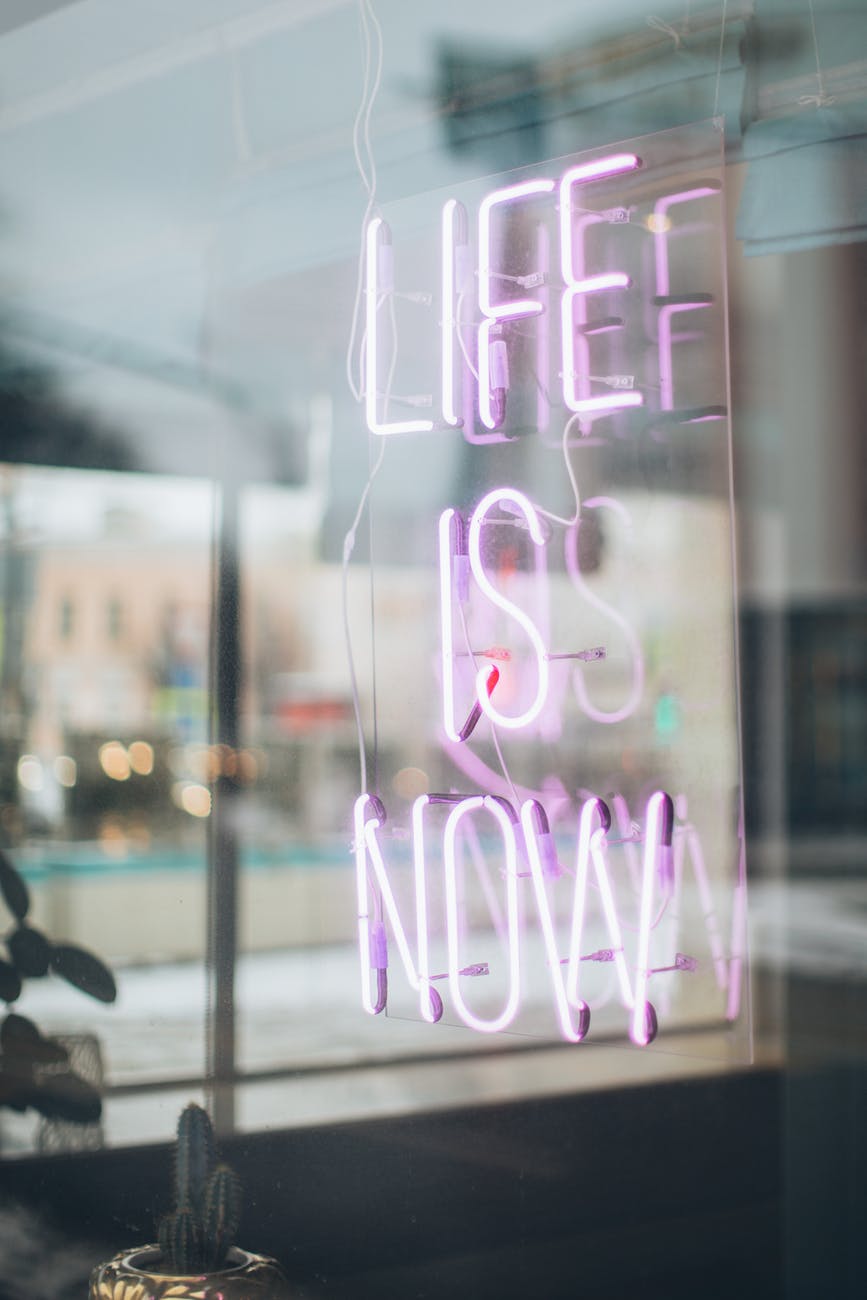
Most people and their minds spend time in two places – the past and the present. Very few, spend time in the right now. Even when they think they are in the right now, what they are thinking, feeling, and doing is informed by their continued issues with the past or their fear of the future.


The right now is rarely separated out, alone, to become their focus, their only focus.

When we feel overwhelmed it is usually because we have allowed events, feelings, memories of the past to “infect” our present. We have not processed these things and we continue to carry them with us making them our reality. They all have a starting place usually not one of our own making but we make them our truths. And we are convinced that everything we are experiencing right now is a result of the past.

We unpack the bags we carry all that stuff in and start attaching the stuff to everything going on in our lives. Sometimes consciously sometimes unconsciously. It just becomes who we are.


We become accustomed to the pain of things and afraid to live our lives without it.

We also pretend we are psychic and can see into the future. We predict the outcome of everything that is happening to us. We make it bigger, more scary, more upsetting. We go to worst case scenarios. We believe our lives will always be the way they are now.

We predict everything including death as we make catastrophes at every moment of our lives. And we believe that this future we create is actually going to happen as if we have some magic machine to make it so.


Guess what? We don’t and we can’t. It’s all made up.

What if we lived in the right now? With nothing added. Trimmed down to the barest essence of this moment. How would we change our stress or depression or anger? In any moment ask yourself the following:

What am I feeling right now? Name it, acknowledge it, examine it, do not grow it, entertain it, live in it. Do not make it about the past or future. If you are upset, why right now are you upset, what happened exactly right now? What can you do about it, anything,nothing? Let it go.

What am I doing right now? Standing, sitting, walking, driving, working. Name it, describe it, notice it. Notice your senses right now what do you see, smell, touch, taste, hear right now.

Breathe slowly. In through the nose out through the mouth. Breathe in hold for 4 seconds then breathe out for 7 seconds. Notice the breathe, notice your body, notice your feelings.


Do not unpack the baggage of the past or predict the future. Stay in the right now.

We suffer first because of what we experience due to either our own choices or the choices of others. We experience suffering thereafter because of the way we live in the past and predict the future. We extend our own suffering and become used to it, sometimes even comfortable with it. We can even become afraid not to have it because we feel we deserve to be angry, sad, scared in order to be who we have come to be.


If we let that go, who will we be then without it?

If you want to find out who that person is, live in the now. Only the right now. Once you do that, it is easier to look at the past objectively and work through it and it is easier to see a future that is a blank slate waiting for you to write on it.

Live right now.

Until next time,
Deborah

Grief Of The Normal

woman sitting while looking lonely

The coronavirus is bringing about all kinds of grief. The grief of losing people is tremendously heavy. The grief of separation is isolating.

The grief of the normal. Of your normal. The grief of what is missing.
It is okay to be sad.

Grief is like an unpredictable ocean as I have written in the past. The waves come and go across our hearts and minds. Sometimes, the waves are small and almost imperceptible.

Other times they are massive and threaten to drown us with their weight.
We are now grieving the normal. The normal of going to the coffee shop with a friend and chatting about our lives.

The normal of grocery shopping without fear or restriction.

The normal of going to work or school in our everyday routines.

The normal of gathering for birthdays and holidays and yes, deaths and funerals.

The normal of reaching out to shake someone’s hand or hug someone as a greeting or goodbye.

The normal of book clubs and poker nights.

The normal of sporting events from tee-ball to professional.

The normal of meetings in person and lunches with friends.

The normal of sleepovers and playdates.

The normal of weekend trips and long-planned vacations.

The normal of going to the movies.

The normal dinner reservations at your favorite restaurant.

The normal of living.

We find these waves coming on us unexpectedly. Where we start to cry out of nowhere. Where we feel sad and lack motivation. Where we feel angry and want to lash out.

It is okay to feel this grief. It is necessary to acknowledge it and to acknowledge what we are grieving for.

It is also necessary not to live there. It is important to not let this ocean drown us.

Just as the waves of the ocean, we can acknowledge and feel the waves and then we can watch them go back out to sea.

We can say to ourselves. Yes, I feel this way, right now. But right now will not be forever. The waves will go back out to sea.

And normal will return at some point. Changed for some, the same for others. But these waves will return to the sea.

Just like the waves in the ocean come and go, no challenge is permanent. Change is the constant in human existence, nothing remains the same forever.

Self Care Is Not Selfish

self care isn t selfish signage

Many times during sessions when I work with clients on the importance of self-care, they respond that they feel doing things for themselves is selfish. Self-care is never selfish, it is essential for your mental and physical health.

Some people have never considered self-care at all. Through their own traumas and negative beliefs they have been taught about themselves, they feel that they must always be taking care of others.

Smoothing over any chaos or anger in others to keep the peace. Making other people happy so more trauma doesn’t happen.

Many times people who have suffered trauma feel that they must always say yes to everyone around them to keep them happy. Again, to keep the peace, avoid more trauma.

And then there are those who are codependent feeling they must ensure others are taken care of, especially those who do not take care of themselves such as people with addictions. People can feel that they are responsible for everyone else to make sure they are safe but provide no safety for themselves.

In many relationships, when people do attempt self-care, others can make them feel selfish and even tell them that they are being selfish and thinking only of themselves. Toxic and abusive relationships are filled with those who will make others feel badly for wanting to take care of themselves or wanting to change their lives.

Self-care is absolutely imperative for your own mental and physical health. If you do not take care of yourself, you will be worn down in your mind and your body. You will constantly feel worn out.

Not practicing self-care can lead to depression, anxiety, anger, and physical illness. You cannot pour anything into others from an empty cup. Self-care is essential to filling your own cup.

To have a cup to pour from you must fill yours first. It is not selfish, it is self love. And self love is always the right thing to do.

You yourself, as much as anybody in the entire universe, deserve your love and affection. ~ Buddha

Until next time,
Deborah

Informed Versus Overloaded

technology computer display text

I have written about self-care a lot over the years as I feel it is one of the most important things we can do to manage our mental health. Sometimes our self-care does not always include managing the amount of information we take in about what is happening in our society.

In times of crisis, the amount of information we can expose ourselves to is seemingly unlimited. Every news outlet, social media platform, radio, television, anything that can contain information is running nonstop 24 hours a day seven days a week. There is no end to the continuous river of information.

While we need to have some information to be aware of what is happening around us, overload is something we choose to engage in. We can read a single article about an event or we can read hours worth of articles about the same event from multiple sources.

We choose how much of the information we consume. And how we choose determines how much of the information consumes our mental health.

Some days, consuming any information may not be the best self-care. There are some days where we are better off not being informed at that moment about all the crises surrounding us. Sometimes, self-care is choosing not to be informed at that moment. And that is okay.

If we do choose to be informed, monitoring our intake is vitally important. Overloading ourselves with too much information can result in emotional and physical symptoms.

Too much information can result in sadness, anger, fear, and anxiety that can translate into headaches, fatigue, insomnia, nightmares, hypervigilance and more. We can be short tempered with others or oppositely we can want to withdraw and isolate ourselves to escape.

We have to be deliberate in our management of the information we consume. We must set limits for our time spent in consumption of this information. It can be difficult when every screen, broadcast, and radio program have more of this same information we are trying to limit.

Then perhaps we need to separate ourselves from these sources of information. Having information free days can enormously benefit your mental health especially in times of crisis.

Making sure that you are informed but not overloaded in this age of unending information availability is vital to your mental health.

Until next time,
Deborah