Do or Do Not

dodonot

Every day, even every moment of the day we are confronted with choices. So many of them we don’t even consider choices but choices they are. It truly is do or do not at the core, emotions are what makes it grey.

When the alarm clock goes off, we can choose to get right out of bed or we can hit the snooze button. The clothes we wear we choose what to put on. Do we eat breakfast or do we not? And what do we eat if we do? Choices all.

As we go throughout our day the choices are nonstop, every second there seems to be a choice that we are making whether we realize it or not. So automatic some of these choices become that it can seem as if we have no control of them as if we have no choice.

That, however, is the emotion of the choice speaking. Making us sometimes feel that we have no choices about what we do or how we live. If we are struggling financially and cannot see a way out, we can think that we have no choices about what we do in that situation. However, there are still choices.

Choices can be easy, mindless, automatic or they can be agonizing, painful, and traumatic. Many times we will avoid the ones that hurt and keep choosing the ones where we are comfortable – emotionally. But that is still a choice complete with its own consequences.

If we change nothing about our choices then nothing changes about our lives. There is no magic choice and change fairy to come and change things for us. Nothing changes without choices. But are we emotionally able and emotionally strong enough to make those choices?

Many times we have past trauma that causes us to be unable to make these choices. Other times we have become so conditioned to choose what we have always chosen that we cannot see a different choice.

One of the main reasons to seek out therapy is to have an objective, not emotionally involved person who can help us see these choices we may not be able to see on our own. To offer alternatives and paths for us to choose differently.

In choices, there is do or do not two options. The middle ground exists as a result of emotional turmoil, it is a creation of the mind built on past traumas and automatic negative thinking. We can believe with all our hearts and minds that the middle ground exists and use it to justify our choices. It is a false narrative.

Examining the why of our choices in an objective, unemotional light is the only way to see clearly outside of the grey.

Until next time,
Deborah

Best Laid Plans

The best laid plans of mice and men often go awry. ~ Robert Burns

Many times, we can start something, make plans, try to help someone else, and yet it doesn’t go as we had planned. In fact, sometimes it can end up as a huge failure.

Our intentions can be absolutely good and worthwhile. We can feel that what we are planning and doing is the right path. We can even convince ourselves that it is going much better than it actually is because it’s hard to admit we have been wrong.

In some of these instances, our well-meaning errors only affect ourselves. However, in other less fortunate circumstances, these best laid plans affect others and that is when we can feel even worse.

The effects on ourselves can still be costly. If not in money, in other ways such as on our emotions, which can affect our physical health and on our thoughts about our ability to make good decisions. So we can begin to question ourselves, our intelligence, our intentions.

The effects on others can be more costly. Best laid plans may seem the right path to us, even for others, but when we try to decide or guide the paths of others and they are unable or unwilling to follow them, the cost can be high. Anger, loss of trust, loss of relationships, and emotional turmoil. Even with the best of intentions, we have to remember that others need to choose their own paths.

So what happens when our best laid plans go wrong? Outside of the things mentioned above, we are usually presented with some choices. The choices of how to continue now that we realize our error and the choice to learn from making the error so as not to repeat it.

Choosing to continue isn’t really a choice, life goes on. Choosing in what way we continue, however, is a choice. We can continue with trying to be better and do better or we can continue with being angry or depressed about our errors.

Choosing to learn and not repeat is a full on choice that we have to make ourselves. We can choose not to learn and ignore our responsibility in the error and we can choose to continue to repeat it suffering over and over and possibly causing others to suffer as well.

The best laid plans with the sincerest of intentions can look and sound brilliant to us, but in reality our perceptions can be wrong. Errors are unavoidable in life. We humans are flawed and we make mistakes. But we are also able to learn and grow and that is the beginning of every mislaid plan.

Until next time, Deborah

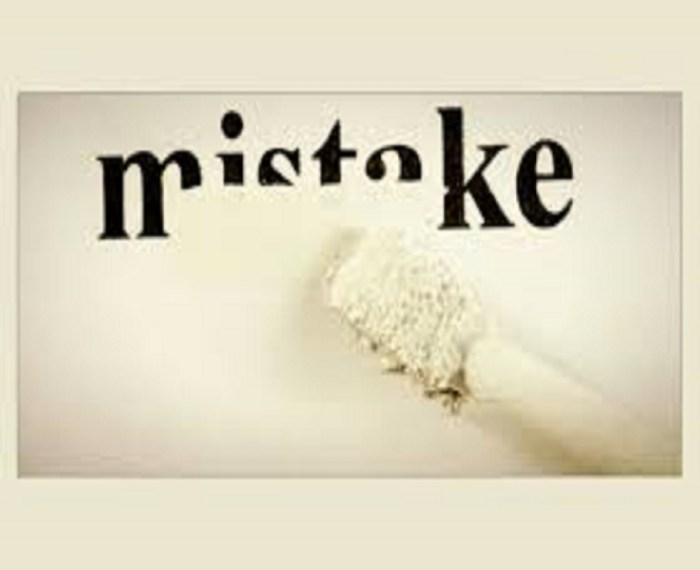
Mistakes

mistakes

Mistakes come in two categories. Those we do not realize we are making and those we choose to make. Both can be life changing and education, if we let them.

The mistakes we do not realize we are making can be the hardest to manage. They sneak up on us when we think we are doing the right thing or making the right decisions. It can take time for it to play out and for us to see that maybe it wasn’t a good idea in the first place.

These mistakes can be sometimes hard to accept. The ones where we think we are being smart but it ends up that we might not be as bright as we thought we were or that we didn’t do enough research or moved too hastily.

These mistakes can also be the ones where we are unaware of the issues driving us to make them or that we have not acknowledged those issues. Getting into bad relationship after bad relationship out of a fear of being alone but wondering why we keep doing it.

These mistakes can teach us lessons and can provide us with the knowledge of what not to do again – IF we let them. Recognizing the mistake and why it was made and working towards not repeating it can be life changing especially if it’s one that we have made multiple times.

The other kind of mistake, one we knowingly choose, is much harder to manage. The one where we know it’s wrong, or we know why we are doing it and do it anyway, or the ones we make out of anger or sadness but we know we are doing it. These can make us feel worse about ourselves after. These can cause us to seek out self-medication for the guilt. These can hurt others as well as hurting ourselves.

Acknowledging our responsibility in chosen mistakes can be very painful and something we try to avoid. We can try to tell ourselves that it was not our fault and blame others. But the truth is in us and it can make us feel like crap about ourselves but we may not know how to stop repeating them.

Both types of mistakes require self examination. Really looking to see how these mistakes happened. Were they the first kind or the second? Why were they made? What is our responsibility in them? And how can we learn from them, not repeat them, and grow? If the mistakes are choices, how can we work through the things that are causing us to continue to make that choice?

Mistakes are not the end, but only the beginning of learning, growing, acceptance, and healing. IF we allow them to be those things. The next mistake you make, stop, examine, don’t blame yourself or others, learn, grow, heal and keep walking.

Until next time,
Deborah

The First and The Last

first-last-5

Making the choice in your mind of what you think the first thing in the morning and the last thing at night can change your entire outlook and mood. One thought twice a day to change the direction of the rest of your thoughts.

How often do you open your eyes in the morning and say to yourself words such as – I slept terribly, my (insert body part here) hurts, I am still tired, I am in a bad mood, today is going to be a bad day, and on and on we go. These words are like the boot up for your brain for the day.

They turn on your system of thoughts and are the power source for everything that follows. If they are negative, everything that follows off of that power source will be negative.

However, if you open your eyes and say – I feel great, I am grateful for another day, I know today is going to be a good day, I am happy. The power source is switched. The boot up is positive. Endorphins are released. We are happier by default.

At night, it is the same patterns. We can end our day before going to sleep with all the negative things we experienced throughout the day. Or we can seek out the positive. Even if there is no positive to be found, we can end our day with tomorrow will be better, I am glad this day is over, I am grateful for sleep, I will dream of happy things. Visualize what you want to see in your sleep. Remember, what you input to your brain is what it will output to you.

Start to practice the first and the last words and thoughts of the day. If you find yourself defaulting to the negative, correct yourself, and insert the positive. Notice the output of your mind if you input the positive at these times of day.

The first and the last word and thoughts of the day can have a profound impact on your thoughts and feelings. Give it a try today and experience the change for yourself.

Until next time,
Deborah

Be Happy Where You Are

photo of woman looking at the mirror
Photo by bruce mars on Pexels.com

Many times we find ourselves being unhappy with where we are. We wish and hope that things will change. We want something, possibly everything, to be different. We cannot seem to be able to be happy right where we are.

I was reading the book The Four Agreements in bits and pieces again between clients this last week. I kept coming back to doing your best. We often can think and then feel that whatever we are doing, where ever we are, we are LESS than. It is not good enough. But in doing your best, it is WHATEVER we are capable of doing at that moment.

Some days, where we are is just awake lying in bed. But our best on that day is being awake lying in bed. Other days, we get up and sit in a chair or on the sofa. On that day, our best is in the getting up and sitting somewhere else. Still other days, we get up, get dressed, and accomplish a single task like brushing our teeth. On this day, our best is doing one single task.

Where we are takes on many shapes. It changes from moment to moment. Where we are can be difficult or it can be easy. Even so, sometimes when it is easy, we are still not happy where we are because we search for something more or find something else that needs to change.

Stop right now and notice where you are. What are you doing? Where are you? What can you see, touch, smell, hear, taste? Tell your mind that you are happy in this moment, right now. You don’t have to be happy about a specific thing, just in this moment I think happy, I feel happy. And smile.

How we think is how we feel, not the other way around. Work this week to be happy where ever you are and practice it over and over. Notice how thinking happy makes you feel happy. Be happy where ever you are.

Until next time,
Deborah

Be Smart About Your Goals

goals

Goal (noun): the object of a person’s ambition or effort; an aim or desired result or the destination of a journey.

The new year brings many things including the desire for many to make changes in their lives. We often hear about making new year’s resolutions. Resolutions always sounded like something congress does when they decide to make or change laws. It doesn’t really sound like a goal the word resolution.

To be successful about your goals you have to be SMART, not smart. Goals need to be:

S – Specific – Drill down to the most specific description of your goal. State exactly what you want to do.

M – Measurable – You need to have a way to measure your progress. Without measuring how do you know anything has changed?

A – Achievable – If you have no chance of success why would you start? Your goals have to be something you can actually do. If your goal is change someone else in your life, it is not achievable.

R – Realistic – Your goals need to be realistic meaning can you do what you want in the time you have specified for achievement. If you have smoked for 40 years is it realistic you can completely quit in 4 weeks without relapsing?

T – Timely – There has to be an end date of achievement for your goals. A goal that goes on forever is just a plan or a wish. The destination of a journey.

If you are thinking of making goals for the new year, really take time to think about them in terms of being SMART and also in terms of what you want your result to be. Consider all the areas of your life – mental, physical, spiritual, relationships, career/school, etc.

Also remember that if you start a goal and find yourself struggling, remember you can set a new timely end to your goal and hit the restart button. Some goals are daily, some weekly or monthly, and some are for life. An every day goal can be restarted every day. Make sure you pay attention to the successes, however small, they are important.

Happy New Year!

Until next time,
Deborah

The Kindness Present

two woman hugging each other
Photo by Daria Shevtsova on Pexels.com

Of all the gifts to give or receive this holiday season, kindness is by far the greatest. Everyone is fighting a battle, even during the holidays. Everyone needs kindness, everyone.

Many people during the holidays are grieving lost loved ones. It is a time of year that reminds us of the people (and animals) who are no longer here with us. Grief can be overwhelming for many during this season. Even if they do not show it outwardly, they still carry it on the inside. An ocean of sadness and emotional turmoil. These people need kindness.

Other people struggle with chronic physical and mental illness and the holidays can increase these issues. Stress can increase these issues and the holidays for all their joy are often filled with stress. A little kindness can make these things seem less overwhelming.

Still others struggle with life/work stress, family relationship issues, financial issues and more. All of these things can impact emotions and physical bodies leading to stress reactions, anger, sadness, and substance use. A little kindness can let them know they are not alone.

There are people who do not have anyone to spend the holidays with for so many reasons. They are alone. They are lonely. One act of kindness could change their lives.

Even if you have family to spend the holidays with and you don’t struggle with many of these other issues, there can still be holiday stress and family dynamics that aren’t perfect even in your own celebrations. Show kindness to your own family AND to yourself. It is important, it is necessary, it is needed.

Kindness isn’t about money. It isn’t about things. It can be as simple as a smile, a word, a hug to give the kindness present this season. Remember everyone is struggling with something right now maybe even you and your present of kindness can make all the difference – to them and to yourself.

The Gift Of Giving

adult birthday birthday gift box
Photo by Porapak Apichodilok on Pexels.com

‘Tis the season of gift giving. Buying, wrapping, giving, and receiving. We spend so much time searching for the perfect gift and so sometimes so much money. But the best gift we can give is the gift of ourselves.

Christmas brings out the spirit of giving, but giving of ourselves is something we can do all year long. Most all of us live in places where there are other people and it provides us with the opportunity to give to others all the time.

The opportunities are endless. Some take a bit more time than others but all give to others. The only cost is your time and a bit of your heart. Here are some possible opportunities to give of yourself. If you do not have these exact things where you live, I am sure there are things that are similar.

* Volunteer at the food bank or other similar food distribution place. Many people are in need of food all throughout the year in our communities. Help these places to serve them.

* Adopt a family or children through your local family and children’s services or reach out to child protective services. Offer your time as a mentor or collect and donate clothes, toys, and other items to help kids in need.

* Organize a hat and mitten tree donation through your school district at all the schools. There are a lot of kids that are in need of these items during the colder months of the year.

* Organize a gift card drive for at risk and homeless students in your schools at various times throughout the year. Gift cards for food and clothing as well as personal care items can help so many.

* Organize a coat and sock drive for your local homeless shelter or other homeless adult services. Having a coat or a good pair of socks can provide much needed warmth and protection.

* Visit nursing homes or assisted living facilities. In almost every town there are places like these with elderly people who are alone. A few minutes of conversation is sometimes the best gift of all.

* Volunteer at charitable organizations. Seek out the charitable organizations in your town and find a spot for yourself to give to others.

These are a tiny fraction of the opportunities available for giving of yourself. It does not have to be a big thing or an organized thing. It can be one thing done for one person that makes all the difference. And it can be done all year long. Practice the gift of giving of yourself and you will also be given to in gratitude and love.

Until next time,
Deborah

Request an appointment for a FREE initial consultation

Reduce Holiday Stress With Self-Care

stack of love wooden blocks
Photo by Ylanite Koppens on Pexels.com

Self care is one of the most important things you can do to take care of yourself. It can also be one of the most difficult for many people.

The great majority of people it seems are consumed with taking care of others. Making sure that other people are happy. Allowing people to treat them in any way they want in order to make sure the other person is happy. They don’t want to rock the boat and make someone upset, so they go along to get along.

Peoplw who have suffered trauma of any kind are even more likely to do for others instead of themselves. These people many times do not feel they deserve or are worthy of care or that they should take care of themselves instead of others.

We all deserve to love ourselves and take care of us. The things we do to take care of ourselves do not have to be big things. Having time to ourselves. Enjoying a cup of coffee or tea. Getting a massage or a new hair cut. Writing or keeping a journal. Taking a nap. Taking a walk. The list is endless.

It is also okay to say no to other people. No to doing things you don’t want to or don’t feel up to. No to things that make you uncomfortable or feel under valued. No to things that damage your mental health. In truth, you can say no about anything. If you can get past the need to please or pacify others and accept that it is okay to do what you need, what you want, what helps you love yourself.

Everyone needs self care. Including counselors. It can be very hard for counselors to feel okay about taking time off and taking care of themselves. But it is important for them and for their clients.

The holidays can be stressful for many reasons, but not practicing your own self care doesn’t have to be one of them. Take time for yourself this holiday season to refresh and renew your own spirit, so you can feel up to giving the Christmas spirit to others.

Until next time,
Deborah

Request an appointment for a FREE initial counseling consultation

Thanksgiving Isn’t For Everyone

white and orange pumpkins on table
Photo by Anna Tukhfatullina Food Photographer/Stylist on Pexels.com

In general, the commercials, the photos, the cards for Thanksgiving all depict the same kinds of scenes. Lots of food and family all smiling and happy and thankful. While this is true for many, for some Thanksgiving is a very stressful time of year for a wide variety of reasons.

Unresolved family trauma is a very real thing that rears its ugly head at the holidays. Long held beliefs about where one fits or doesn’t fit into their family come to the surface. Continued abuse either emotional, verbal, or physical find their way out during the holidays. Sometimes, just being in the same room with someone is more than many people can bear.

Grief and loss affect Thanksgiving for many others. The holidays are powerful reminders of those we have lost either through death or the end of relationships. The waves of grief can be too much to surf with a room full of people expecting you to interact and have conversations.

Some people don’t have families. There are circumstances that can leave people alone. Truly alone. Feeling that and being bombarded with the images of Thanksgiving as this happy family holiday can be overwhelming for many of these people.

So how can one weather the Thanksgiving holiday if our lives do not resemble the “happy family Thanksgiving” presented to us on a daily basis? The focus must be on doing what is best for you, not what is expected.

* Do not feel pressured to attend any event. This can be very difficult with families due to the possible judgment (real or imagined) that can occur. You do not have to go at all. However, if you do go, you do not have to stay very long. Don’t go early. Possibly present yourself for the meal only and after it is over find a way to leave quietly. If the event is with friends but you are not feeling up to it for whatever reason (grief, loss, illness, etc.) you do not have to go.

* Be aware of your own feelings. If a Thanksgiving gathering makes you anxious, sad, depressed, overwhelmed or any other negative emotion notice it, acknowledge it, and if you feel you need to leave for your emotional health – leave.

* Limit alcohol consumption. At many Thanksgiving gatherings, alcohol is part of the event. When we are feeling anxious, sad, depressed, grieving, or emotions from the past come up, we can think that drinking more alcohol can dull those emotions. Many time it can have the opposite effect increasing them and also lessening inhibitions that can cause us to act or say things in ways we would not if we were sober. This can lead to arguments, fighting, and even physical confrontations.

* Avoid the drama. Don’t take the bait of judgmental comments made by others. Redirect conversations that are critical, political, or confrontational. Enforce and reinforce your own boundaries politely but firmly. If things get too heated or make you very uncomfortable, leave.

* Give to others. If a gathering of family or friends is not something you are looking forward to, maybe finding a way to give to others would be better for you. Help collect and distribute Thanksgiving meals or turkeys to those who don’t have them. Volunteer to serve Thanksgiving dinner at a shelter or other facility for those without families or homeless. Visit a nursing home to spend time with some older folks who may not have family.

* Self-Care. Whether you spend time with family, friends, others, or alone for Thanksgiving, find time for your own self-care. Do something you enjoy. Something that you find relaxing. Go for a walk, meditate, write, paint, take a bath, get some exercise, put on your pajamas and watch football or a favorite movie. Invest time in letting go of any stress that has built up throughout the day or the several days of the holiday (shopping can be stressful too). Take care of you.

Whatever your Thanksgiving holiday contains, I do hope that you find a way to recognize the things you have to be thankful for. If it is family and friends be thankful for that. If it is for pajamas and watching football be thankful for that. If it is for helping others and giving of yourself be thankful for that. If it is for opening your eyes to another day be thankful for that. Find your thanks where ever it is. It is okay, Thanksgiving isn’t for everyone, but being thankful is.

Until next time,
Deborah

Request an Appointing for a FREE Initial Consultation for Counseling