Stay On Schedule

gold ipad beside stylus

Every day there is a new article or news report about the most important thing we can do during this virus crisis. From distancing to mask wearing and everything in between. However, there is one thing that is being overlooked and which I think is extremely important.

STAY ON SCHEDULE

All of us, from children to adults, are used to a schedule of some kind. Whether the schedule is for work or school or even the schedule you had if you were already staying at home before this crisis happened. Most everyone has some kind of schedule.

In having this schedule, your brain and body become used to doing things at a certain time. They become accustomed to responding to the need to work, eat, play, sleep at regular intervals. They become conditioned to this is the time and at this time this is what we are supposed to do.

Keeping a schedule when everything you kept a schedule for has been turned upside down is very difficult. It is very easy to slip into pushing the conditioned schedule responses away.

We stay up later watching movies or playing video games. We sleep in later as we realize there is really no where we need be in the mornings. We skip meals or start “grazing” or eating in passing of whatever is available. We stay in our pajamas and routine hygiene can become less and less.

This all may seem quite liberating at first. No demands or pressures to get up at 6am or be in class or at work by 8am. We can choose Netflix or Hulu and lie in bed all day long. Sounds like what we may have longed for all those days we were bound to the schedule.

Very soon after, however, our brains and bodies start to react to the lack of schedule and routine. The brain becomes sluggish. As if it’s not really awake. The body starts to feel tired even if we are sleeping more. We have body aches and pains from all this new laying about for hours. We start to feel sad and then possibly irritated or both. And we long for our past schedule and the activities that go with it.

It is especially true for younger people and children. Their need for structure, routine, and schedule is even more pronounced. Without it, they fall into boredom, sadness, irritation and are less able to self-regulate their emotions, which leads to outbursts of anger or tears.

When you add on possible fears of getting sick or having someone in your life who is sick and then add on possible job losses and financial issues, this can increase the body and brain’s response to lack of schedule.

So, how do we manage this at this time in our lives? We must make every attempt to stick as close as possible to the schedule we had before this event started. The brain and body need it. We need it. Yes there can be some leeway or stray from the 6am alarm time, but it should not be more than a couple of hours at most and the same for bedtime. Eating should be monitored so as not to stress eat or eat poorly. Hydration should be kept up. Getting outside should be scheduled in.

You can make a new schedule with different activities due to the way things must be managed during this time, but you can make a schedule and stick to it.

Believe me, your brain and body will thank you for it. You will feel better and your emotions will feel better. And it is not too late to start if you haven’t been doing it thus far. Today is a new day and your schedule can begin again.

Until next time,
Deborah

Get Some Sun

sunshine

Social distancing does not prevent us from going outside. It just helps us not to congregate together. Going outside is essential to physical and mental health and even more so during this time.

Most of us are spending a lot of time at home right now. We are finding it difficult to keep on a schedule. We are consuming a lot of streaming shows and videos. We just are not getting out much in some cases.

Our bodies and minds need the outside and they need the sunshine and vitamin D. During this time of staying at home, it does not mean we cannot go outside and get some sun. There are many ways to do it and the benefits are invaluable.

In northern climates, it is even more important to get out and get some sun due to the fact that there is less exposure during the winter months. Increasing your intake of vitamin D can also be helpful, but being in the sun is still necessary.

Recently in Montana, we had some snow for a couple of days. It was cold and the sun wasn’t out and many people I talked to felt very down during those days. The sun is out now and it is beautiful outside, and we need to be outside too.

Even if it is just to go out into your own yard or on to your own porch for an hour or two. Going on walks on paths and trails or bike rides in the sunshine. Walking around the block of you neighborhood a few times. Or just getting a lawn chair and sitting in your driveway in the sun.

It does not matter how you get out and get sun just that you do. Your mind and body will feel so much better and brighter just like the sun itself. Even a few minutes can make a big difference.

Remember to keep your distance with others when you are out, but go outside. Staying in the house all the time during this crisis is not helpful. Social distancing does not mean complete isolation. We need to still be social in the ways that we can and we need to be outside as much as possible when the sun is out.

Go outside today. Get your family outside. Soak in some vitamin D and be mindful of the beauty of the coming spring and change of season.

Go outside and get some sun. Your mind and body will be grateful for it and your spirits will be lifted.

Until next time,
Deborah

Calm Your Worries

adult air beautiful beauty
Photo by VisionPic .net on Pexels.com

In times of uncertainty and increased anxiety, our worries can increase with out fears. With each added worry or fear, we can find ourselves feeling overwhelmed and in some cases unable to do even the most basic things.

The first step to calming your worries is acknowledging they exist. Many times, we think it is easier to ignore or deny or dismiss what it is we are afraid of or worrying about. This might work temporarily but the worries present themselves again at some point and in usually greater numbers.

Sometimes we use behaviors to distance ourselves from the fears or worries. By using substances or sleeping all the time or becoming irritated and taking that frustration out on others around us. But still we are not recognizing the fears and worries for what they are.

Confronting fears and then truthfully analyzing them is the only way to take away their power. Monitoring the truthfulness of the fears or worries. This can be done in a variety of ways.

Keeping a journal of your fears or worries. Writing them down daily. Coming back to them the next day to see if they actually came to pass. If they did not, then it helps to reinforce that they are not true and are a creation of your mind. If you do this repeatedly you will find that your mind starts to dismiss the same fears or worries because you have already shown it that they are not going to happen.

There is an app also that can help with managing fears and worries. It is Worry Watch. The app helps you keep track of your fears and worries and also helps you to track the truthfulness of them. There are also positive affirmations and other tools for reinforcing new thoughts to replace you fears and worries.

In times of uncertainty, fear and worry seem to grow rapidly. It is important to face them, apply the test of truthfulness to them, and replace them with different thoughts that are true.

Take some time today to get ahead of your fears and worries before they get ahead of you.

Until next time,
Deborah

The Importance Of Self-Care In Isolation

man standing beside window
Photo by Jose Antonio Gallego Vázquez on Pexels.com

Self-care is an important practice at all times, but now even more so during these periods of isolation. With so many things on our minds during this time including care for others, worries about jobs and bills, children home from school, not being able to get supplies, our own self-care can fall by the wayside.

Isolation for those not used to it and even for those who are who feel even more isolated can result in an increase in mental health issues such as anxiety and depression.

It is very important to keep up your self-care routine as much as possible or to start doing self-care on a more regular basis while isolated. Many of our self-care options are being limited by social distancing such as gyms, movies, massages, restaurants, etc. We can find that many of the things we did for self-care before are not available to us now.

That is when we have to find new ways to care for ourselves in the confines of our current situation. If we do not find these outlets for our anxiety and depression, we may find ourselves sinking further into despair and worry.

Here are some ways to practice self-care at home during this time:

1 – Writing. Starting or continuing a journal. Writing poetry. Writing short stories. Getting emotional transference through writing.

2 – Meditation. Continuing or starting a meditation practice. Calming your mind can go a long way to calming your life. Apps like Headspace, Calm, Worry Watch, and more can help you in this meditation process.

3- Art. Painting, drawing, crafting, creating and any other art related activity can inspire creativity, promote the release of dopamine and focus your thoughts on what you are doing.

4 – Games. Playing games can be very helpful during this time. If you have kids at home playing games with them or playing games by yourself on your phone, computer, or gaming system. I wouldn’t recommend doing it nonstop but every now and then offers a good break in the routine.

5 – Organizing. Taking a room of your house one at a time and organizing, managing clutter, and tidying up can not only help your home space but your mind space as well.

6 – Schedules. Having a set schedule for each day regardless of if you can go out of the house or not. A time to get up, make breakfast, work on tasks, do self-care, etc. If you have children, a schedule is necessary to continue providing structure and routine which they desperately need.

7 – Get Outside. Even if you cannot go to places you normally would, you can go outside your house. Even if it is just to sit outside in your yard in the sun, it will make a HUGE difference.

8 – Exercise. Do some kind of exercise. Even if it’s just stretching. Yoga, walking around your house, anything to get you moving and get those endorphins and dopamine going.

9 – Humor. Don’t get trapped in the gloom and doom of the news, social media, and your fellow man. Find some humor. Find ways to laugh, a lot. Funny videos, movies, comedians and things like this are all ways to have a good laugh.

10- Therapy. If you go to therapy already either keep going in to the office if possible or see if your therapist can offer telehealth (video sessions). If you feel you need to see a therapist do the same thing, go in or see if they offer video. Your mental health is important too.

These are just some of the things you can do during this time of isolation to take care of your self-care. Don’t stop taking care of you.

Because you matter.

Until next time,
Deborah

Responding To Fear

fear

The coronavirus is making it’s way through the world and the fear that accompanies it is overtaking many people’s minds. In many cases, the fear is far surpassing the actual virus and causing many to feel anxious and in some cases more anxious.

As I tell my clients, fear is the strongest emotion in the world. It is fear that drives almost every decision that people make. Fear pushes people to act and react in ways that they might not normally. And now fear is at the heart of this virus.

The way that fear spreads is by our response to it. If we respond to fear with fear, then the fear grows bigger. When many people are afraid and that fear is reinforced by media and government, the fear grows and spreads and then behaviors change and our anxiety increases.

So how do we manage our response to the fears of those around us, the fears coming from media and government? The same way we respond to any other fear that we encounter. In the present moment, what do we know as the truth in our own lives.

In this moment, what is happening in your life only. What is occurring in your own life, your own house, at the moment. Not what is happening to others. Not what the media or government say. But what are you actually experiencing in your own life at the present moment.

We cannot control the fears of others or their responses to it. We can only try to control our response. But that is not easy to do when we are surrounded by the fear of others.

This is why it is so important to stay focused on what you know to be true in your present moment. Not what other people are saying is true or how other people are responding to their own fears. But what is true for you, right now, this moment.

Fear is very contagious. It is spread when we accept other people’s fears as our own. We can be proactive during this virus by washing our hands, staying home if we are sick, staying hydrated, and getting enough rest. We do not have to panic or allow others panic to increase our fear.

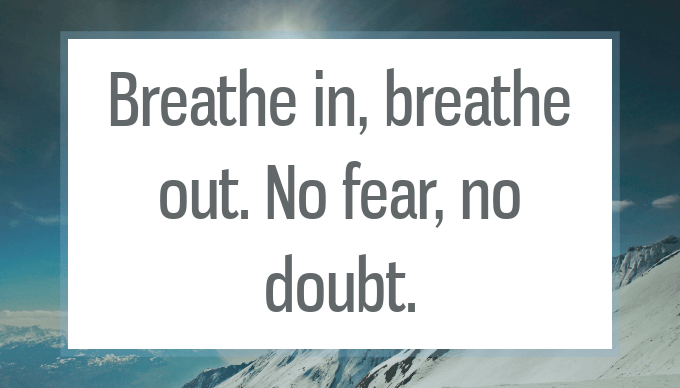
Stay in the now with what you know to be true for yourself. Take precautions but avoid panic and the fear of others. Breathe in, breathe out. Let go of fear and doubt.

Until next time,
Deborah

Inspiration For Survivors

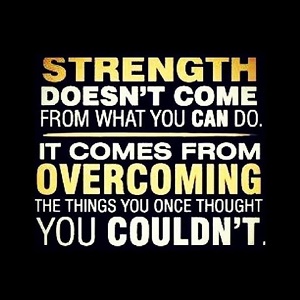
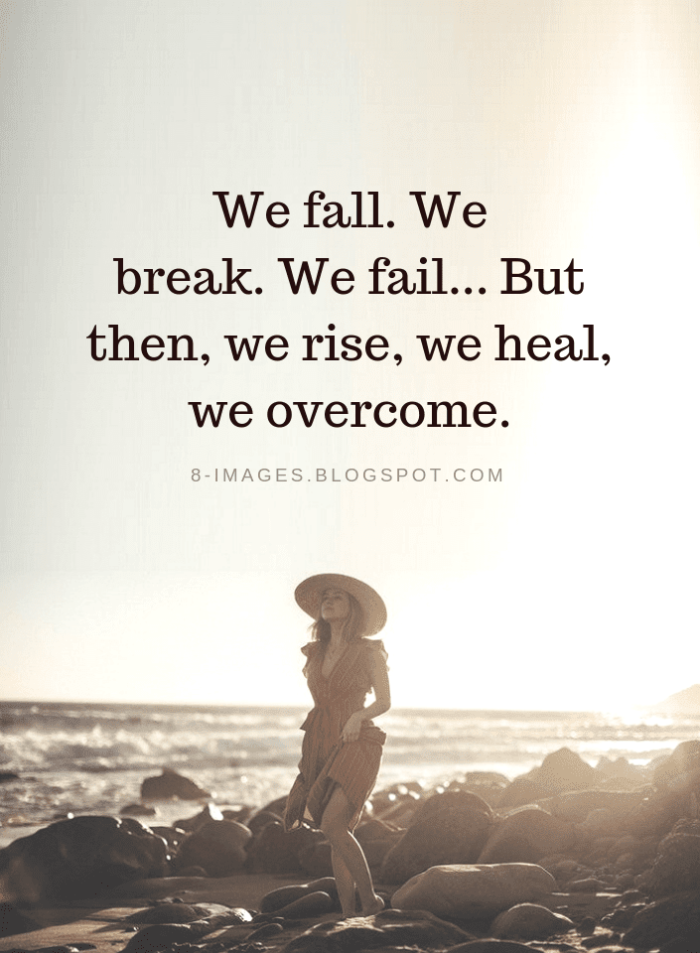
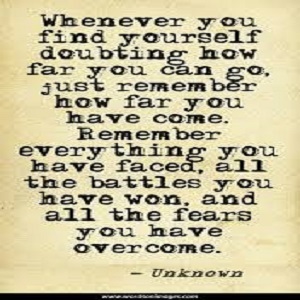
This week I thought I would do something a little different. We all need inspiration. We all need motivation. We can all use encouragement for our journeys. Seven quotes to encourage, inspire, motivate each day of this week. Use them as affirmations, read through them every day, repeat and reinforce.

quote1

quote2

quote3

quote4

quote5

quote6

quote7

Being an overcomer, a survivor means that you have been at the bottom, the darkest places, but you have chosen not to live there. You have found ways to motivate yourself, believe in yourself, never give up on yourself. If you feel you haven’t started that journey yet, perhaps these quotes can help you take that first step.

Believe in yourself, always.

Until next time,
Deborah

How To Identify An Addiction

photo of woman looking upwards

Whenever most people hear the word addiction, their first thought is drugs or alcohol. While drugs and alcohol can lead to addiction, they are by no means the only things people can be addicted to.

An addiction is anything in our lives that we cannot stop doing and that we feel compelled to continue doing and if we attempt to stop doing it we suffer negative reactions.

We can be addicted to almost anything. Food, exercise, shopping or spending, gambling, phones or tablets, video games, self-harm such as cutting, soda, hoarding, cleaning, and anything else we are not able to stop doing and that if we try to stop causes us negative reactions.

Addictions are built up over time of repetition and reinforcement. Similar to forming habits, but the difference in addictions is that our brain becomes convinced that we need the thing we are addicted to and that we cannot live without doing it. We are compelled to do it by what becomes a chemical need for it. The addiction releases dopamine into our brains (reward chemicals) that make us want to have that reward or in some cases release more and more.

If we try to stop these addictive behaviors, we suffer withdrawals just the same as we do if we are addicted to drugs and alcohol. In fact, the withdrawals can be exactly the same. Nervousness, shaking, feeling depressed, being irritable can all be present. I have seen many clients who are addicted to electronic devices and/or video games who stop doing them or are prevented from accessing them by parents, who then display these withdrawal symptoms.

Most all addictions have a negative effect on our lives. We may tell ourselves that our addiction doesn’t affect us negatively so that we can continue doing it, but a truthful examination will show that is not true. Addictions cost us money, time, relationship issues, health issues, emotional issues, and much more. What is your addiction costing you, honestly?

Many people with addictions do not want to give them up. Convinced that they are making their lives better or that the addictions make them feel better emotionally (which dopamine can do that) but it is a false sense of feeling better. It is avoidance of dealing with the emotions that are driving the addiction. Many times, I have clients say, I play video games all day because I enjoy it. Only minimally true, it is more likely because they are avoiding a negative emotion or situation. Constant dopamine release can make one feel that way.

So, if you have an addiction, how do you break it? One step at a time. One choice at a time. One moment at a time. And working to gain understanding of what the addiction is helping you to avoid? Emotions, trauma, relationships? It can take quite some time to break an addiction and there will be negative responses by both your body and brain during this time. This is why many people start trying to break an addiction and when the negative responses come they find it too hard and give up or relapse.

Even if that happens, we can always start again and again and again. As long as we are alive, we have the opportunity to begin again. We do not fail because we do not succeed on the first attempt or the 50th, we fail because we do not try again.

One step at a time. One day at a time. One hour at a time. One second at a time. One choice at a time. Repeat as often as necessary. Fail. Try again. And then keep trying.

Ways To Find The Good

photo of a woman standing on the sunflower field

Every day we are faced with a choice. The choice to look for the bad or to find the good. Whatever you look for it will be found.

Each day we can look for the things we want to find. Regardless of our circumstances, we can find the good. If we are going through difficult times, it can be hard for us to pull ourselves out of that space to look for the good. But it can be done, one thought at a time.

SLOW DOWN

The everyday stress we carry can sometimes be overwhelming. If you have added stress from relationships, physical or mental health issues, or unresolved past traumas, it can be even more overwhelming. Everything can seem to be moving at light speed. Slow your thoughts and emotions down. Practice deep breathing, just a few very big breaths in through the nose and out through the mouth can lower your heart rate and blood pressure and give you space to think more clearly. Once you have slowed things down a bit, you can look around you for the good.

SHARPEN YOUR SENSES

In the same way that you would use your senses for grounding yourself during periods of stress, you can do the same thing when looking for the good around you. What do you see that is beautiful, magical, uplifting, etc.? What can you touch that is comforting, warm, soft, etc.? What can you hear that is calming, beautiful, uplifting, etc.? What can you taste that is calming, comforting, filling, warm, etc.? What can you smell that is calming, comforting, etc.? Use your senses to find the good around you.

GRATITUDE

Turning your mind to what you are grateful for rather than what you are not can have a profound effect on your thoughts and emotions. Gratitude does not have to be something big. Even the smallest thing that you are thankful for, that makes you happy, that gives you even the smallest joy, is something to be grateful for. Everyone can find something to be grateful for and once you begin to think about it, your mind will help you find others. Find the good in your gratitude.

SELF-CARE

Even if the darkest of times, self-care is still important. When you are overwhelmed, find one moment, one thing that you can do for yourself. Five minutes of decompression before facing something difficult. A short hot shower. A few minutes of meditation or deep breathing. A piece of dark chocolate or a cup of herbal tea. A few minutes smelling essential oils. Self-care can help you recenter and find the good.

Every day, even every moment, offers an opportunity to find the good. There is something you can find if you slow down, use your senses, practice gratitude, and self-care. Find the good in every moment to help get you through stressful and overwhelming times.

We find whatever it is we are looking for. Look for the good. ~ Al Carraway

How To Love Yourself More

adult blur bokeh bright

For many of us, so much of our time is spent in things we do not love about ourselves. Things we think are true about us. Things we think others think are true about us. The way others make us feel about ourselves through words or actions or the lack of them.

It becomes so much easier to live in the world of what we do not love about ourselves that it becomes automatic.

Contrary to what we may believe, there are things we like about ourselves and even things we love. We just have to ask our brains the question. What do I love about myself?

It may take some time for the brain to go through all the data in our minds and sift through what we do not love to find the things that we do, but it will find them. The brain hates questions and loves answers.

Before writing this piece, I asked myself the same question in an activity with clients this past week. I found that it was very hard at first to come up with things I love about myself, and I also found that quite shocking. I thought it would be much easier than it turned out to be.

At first, there were just a few things that came to mind quickly. But over the course of the week that I worked on this with clients, my brain found more and more things and presented them to me. Sometimes in sessions and sometimes randomly. But my brain did find them and it will also find yours.

Some of mine were my organization, my determination, my artistic side, my objectivity, my eyes, and on and on it went. My brain is still finding answers to the question and as long as I continue to ask the question it will continue to look.

It can be very helpful to write these things down and then use the things you have written down as affirmations. Placing the list where you can see it daily and reminding yourself of the things you love about you. Repeating them throughout the day. You then create new automatic thoughts of self-love.

Find some time to try it out and teach yourself how you can remind your mind about the things you already love about yourself. They are in there.

Love yourself and the rest will follow.

Losing Yourself

alone cold fog forest
Photo by Rene Asmussen on Pexels.com

The more time I spend working in the trauma-focused world of counseling, the more I realize codependency is far more widespread than previously thought. Especially traumas that are experienced in childhood, which makes sense as that is where everything is set for future behaviors, beliefs, and choices.

Codependency most often stems from a childhood that contains either physical/sexual abuse, witnessed domestic abuse, addiction in parents, lack of parents, neglect, parents with mental illness, emotional abuse or any combination of these. Codependency also occurs if the child has no parents especially mothers in their lives.

The child will develop beliefs about themselves and an absolute need to try and contain, control, or cover up the situations they find themselves in. All while desperately wanting to maintain the relationship so their parent will love them or at the very least acknowledge them in some way.

The child will spend every waking moment trying to make sure the parent is okay or in their minds “happy.” If people are happy they won’t take their unhappiness out on them. They also spend their lives being small adults caring for parents who cannot care for themselves. Cooking, cleaning, providing alcohol or drugs, doing what the parent wants no matter what it is to keep them happy, taking care of siblings.

Always, always, seeking love from the parent, approval, even just being noticed is enough to keep the child repeating the cycle.

Through this behavior, the child develops a very low self-image believing they are not worthy of love. They develop poor boundaries and in many cases no boundaries. There is a constant need to save others or make others happy. They never consider what they need or want. There is a constant need for perfection so that they might be lovable. And an absolute need for control over anything that they can control because life with their parent is always chaos.

All of these things become set inside the child between birth and age 7. After this, these beliefs, behaviors, and choices become solid in the psyche and they are then seen as “normal” and they are not questioned. They are just repeated and repeated throughout their lives in every single relationship they have.

They seek out relationships with those who need saving. They never consider what they want or need or how they feel. Every relationship is the one they had with their parent or the one they didn’t have with their parent because the parent wasn’t there. They control their children’s lives because they couldn’t control their parents. They never say no in relationships because they need the other person’s approval for their own self worth.

Codependency can be extremely hard to change because by the time someone seeks out help it has been their norm for years and years. They have no concept of self-love or self-care. Boundaries are a foreign concept. Being alone is an all consuming fear. Children will always want their parent to love them no matter what the parent has done even when they are no longer children – it is genetic.

Learning to say no is one of the most important things codependent people can do to begin to set boundaries with others. Understanding the difference between saving people and supporting them without enabling their behaviors. Self-care and self-love are absolutely necessary to breaking the chains of codependency. Knowing that they have worth in themselves and do not need others to provide it for them.

Counseling can help codependent people see things more objectively and offer ways to start to change. The biggest thing that keeps people from letting go of codependent behaviors is fear. Counseling can help process through this fear and open the road to moving forward. Reaching out for help can be the first step to change.

Until next time,
Deborah