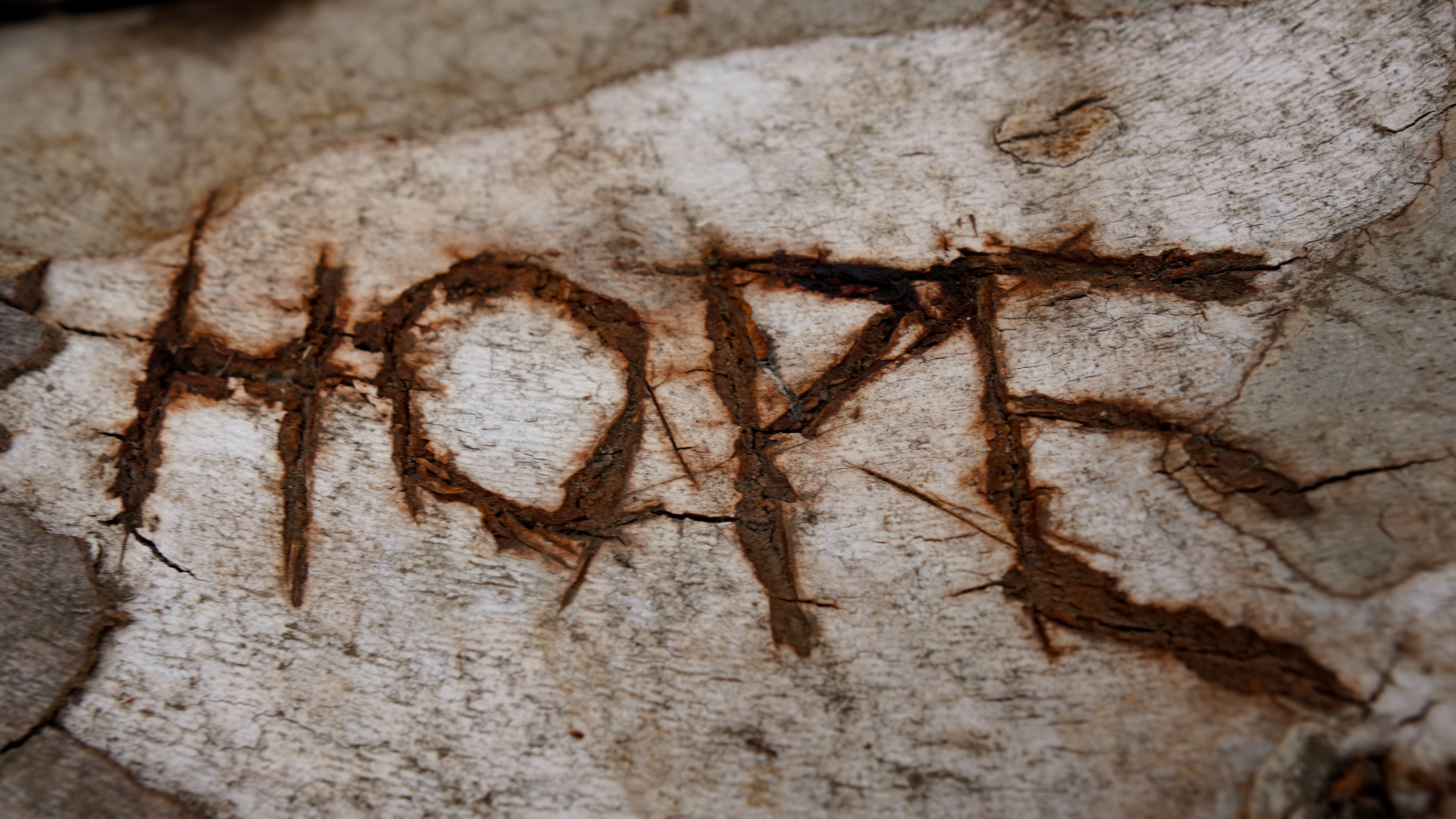
Toxic Hope

There are two kinds of hope for humans. The kind you need to survive and the kind you need to abandon. The hope you need to survive is the one where you do not feel absolutely hopeless and that there is no reason to live. The kind you need to abandon is toxic hope or the hope you hold on to in toxic relationships “hoping” they will change and being unable to leave.

Toxic hope is probably one of the biggest problems most humans have. It originates in trauma. When our negative beliefs are such that we are always seeking something in relationships to fill those unprocessed holes we cling to toxic hope. We go from toxic relationship to toxic relationship trying to find the one that is going to fill up the holes we have as a result of our trauma. A broken biological mother bond – we either look for someone to make us feel like they are our mothers or we mother others. A trauma of not having value or being worthwhile – we cling to someone we think is going to value us or make us feel worthwhile…one day. A trauma of needing to people please in order to be loved we keep doing everything for someone no matter how they treat us because “one day” they might love us like we seek to be loved.

Toxic relationships are formed as codependency or trauma bonding, we believe no one else will be able to accept or understand how we are except this person no matter how bad the relationship is. Fear of loss or abandonment, we must hold on to the person we have no matter how toxic they are so that we are not alone. And we keep hoping and hoping that things will get better. We keep hoping that we will get what we are seeking to find. We keep hoping that this person will wake up one day and be different.

And we end up stuck and unable to break free and spend years of our lives….hoping. And lying to ourselves.

The only way to get out of these toxic hope relationships is to examine ourselves and why we stay…why we truly stay. What is it in us that compels us to keep “hoping” to keep lying and to keep staying? We must dig deep and answer truthfully. It will always…always…always lead to unprocessed trauma.

Once you have answered the question truthfully, then what will you do about it? It can get messy. There can be children involved, divorces, and financial issues. It can be very difficult to extricate yourself. But there are only two options – free yourself from the relationship and your trauma and free your life or stay and suffer all the consequences that follow. If you have children and are in toxic relationships, you are allowing this to traumatize your children and it does not matter their age – young or older – they will be traumatized and have their views of relationships and their worth in them damaged for life if you stay. Even if you leave, they need therapy too.

You make the choice. You can go or stay. Each has consequences. Going allows you to free yourself. Staying allows you to become enslaved and damaged. But the choice is yours and whichever choice you make you have to accept the consequences. Complaining that your life sucks because you chose to stay after you have answered the question of why you are there is no one’s fault but your own.

No hope will kill you and toxic hope will kill you it’s just a matter of how and when. Seek out a therapist to objectively help you examine why you are stuck in toxic hope situations and then make a choice.

Until next time be well,

Deborah

Start Saying No

Photo by Isaiah Rustad on Unsplash

I have written about boundaries many times over the years. I believe that the inability to hold boundaries in all aspects of life is the main reason people with trauma continue to suffer.

The inability to say no to people and things brings repeated suffering and increased trauma responses. Every time a client tells me they cannot say no, they always include all the reasons for justifying this inability. Every one of these reasons stems from past trauma. Every single time.

Someone cannot say no to a toxic family relationship. Something that causes them great anxiety, frustration, and even anger they cannot say no. They continue to participate in it even if it is just peripherally, they are still letting it affect their lives. They can rant and vent at length about how this affects them, but when asked why they do not eliminate this from their lives the excuses pour forth.

A family member will be angry with them and ask why they do not care about the family. A family member will be sad that they are not including themselves in the family. A family member will threaten not to speak to them again if they put up a boundary. A family member will feel they do not love them if they do not engage. And on and on and on it goes.

Justification to continue suffering. Justification to continue reliving trauma. Justification for accepting they will be anxious, sad, angry every day because it.

All because they cannot say no more.

Someone cannot extricate themselves from a toxic romantic relationship. Something that makes them feel unvalued and worthless. Something that makes them blame themselves and resort to codependence to keep the relationship going. Something that allows them to never have their emotional needs met. They tell the same stories constantly about how they are treated and how badly it makes them feel, but they cannot say no.

The excuses are always the same. I am afraid to be alone. I have children with this person. I share finances with this person. What will I do if they are out of my life? And the trauma response, the way they treat me is my fault. I am causing the issues. And on and on and on.

All of this is developed out of past trauma and ongoing trauma. And of course fear is at the root of all inability to say no. They continue to be traumatized and internalize all the negative things they care conditioned to believe.

All the unresolved trauma blends with all the newly inflicted trauma until there is nothing but negative thinking and fear left. The inability to say no is a prison.

The only way to be free of suffering in all aspects of life is to start saying no.

Start with one thing. Say no more and stand firm. It will be difficult, very difficult. There will be backlash, always. Other people do not like being told no. Especially if you have not said no before. They expect that you will always say yes. When you say no, a tantrum will ensue based on THEIR feelings not what you have done. Their response is NEVER about you. It is about them.

Let them throw their fit and move on. If they truly care for you they will get past their feelings and have a relationship with you. If they do not truly care for you, they will not. They will make you feel guilty, make you feel scared, and make you feel sad. They will try every manipulative button they have ever used on you to get you to continue to say yes to try and break you down and make you give up your boundaries.

Those people do not love you. They will never love you. They will never value you. They will never respect any decision you make. Ever.

Conquer your fear. Talk back to your negative conditioned beliefs. Recognize your worth for yourself. Start saying no.

Freedom is not the ability to say yes. It is ability to say no.

Until next time be well,

Deborah

Fear of Being Alone

alone

One of the things that comes up again and again when working with people is the fear of being alone. In many of these instances this fear can be traced back to childhood trauma with chaotic family dynamics and lack of self worth and feeling loved. As the child grows they continually seek out this self worth and love from both the family, who may or may not be able to provide that, and from relationships with others. And because people find themselves in damaged places emotionally they can often make poor choices in those relationships.

In these relationships people often gravitate towards partners who are emotionally unattached in some ways. Someone who really doesn’t show that they need them or want them. Someone who doesn’t want or accept any children they may have. Someone who can easily let them go or cheat on them. It provides a kind of constant chase or work to get these people to be invested in them much like they would have had to do with family who wasn’t emotionally invested in them. The other kind of relationship people who fear being alone gravitate to is one where the other person is extremely controlling and seemingly very invested in them. If the partner is constantly questioning what someone is doing, where they are going, who they are with, wanting them to be with them 24/7 then the person who feels alone will think they are getting all the attention (love) from their partner when it is actually abuse.

Once people become involved in these kinds of relationships, they may also have a tendency to excuse bad behaviors of their partners to hold on to the relationships. This is usually also a learned behavior from childhood trauma. Excusing family for bad behaviors so that the family might still love them and see them as valuable by their defense of them. Also, in order to try and hold on to those damaged family relationships people try to avoid conflict at all costs even accepting physical, emotional, verbal, and sexual abuse in order not to lose this relationship. This translates to older relationships and the same patterns occur over and over.

Another byproduct of the fear of being alone is holding on to past relationships in order to have a back up if the current relationship ends. Because many people who fear being alone have no self worth or self esteem they feel they must have someone else to validate that in them even if it is negative validation, it is still someone whose attention is on them. Something they did not get in their childhood traumas and family relationship chaos. These past relationships become the fall back even if they are abusive, it is still someone to pay attention to them, someone for them to chase, someone to provide them with a false sense of self worth.

So, how does one avoid falling into these relationship patterns and fighting this fear of being alone. There is only one way – working through, processing, and accepting the childhood trauma so that there can be understanding of the choices they are now making in their relationships and to work on building their own self worth, self esteem, self love.

It is not an easy path to change. The fear of being alone and the childhood trauma have been a part of their lives for a very long time, years, and it has become an automatic behavior. It can take a very long time to rework and replace those thought and feelings and build a new way of thinking and feeling. It takes a lot to create a life for yourself that you do not need another person to make it okay for you.

Until next time,
Deborah

Request a FREE Initial Counseling Appointment