Goal (noun): the object of a person’s ambition or effort; an aim or desired result or the destination of a journey.
The new year brings many things including the desire for many to make changes in their lives. We often hear about making new year’s resolutions. Resolutions always sounded like something congress does when they decide to make or change laws. It doesn’t really sound like a goal the word resolution.
To be successful about your goals you have to be SMART, not smart. Goals need to be:
S – Specific – Drill down to the most specific description of your goal. State exactly what you want to do.
M – Measurable – You need to have a way to measure your progress. Without measuring how do you know anything has changed?
A – Achievable – If you have no chance of success why would you start? Your goals have to be something you can actually do. If your goal is change someone else in your life, it is not achievable.
R – Realistic – Your goals need to be realistic meaning can you do what you want in the time you have specified for achievement. If you have smoked for 40 years is it realistic you can completely quit in 4 weeks without relapsing?
T – Timely – There has to be an end date of achievement for your goals. A goal that goes on forever is just a plan or a wish. The destination of a journey.
If you are thinking of making goals for the new year, really take time to think about them in terms of being SMART and also in terms of what you want your result to be. Consider all the areas of your life – mental, physical, spiritual, relationships, career/school, etc.
Also remember that if you start a goal and find yourself struggling, remember you can set a new timely end to your goal and hit the restart button. Some goals are daily, some weekly or monthly, and some are for life. An every day goal can be restarted every day. Make sure you pay attention to the successes, however small, they are important.
Photo by Anna Tukhfatullina Food Photographer/Stylist on Pexels.com
In general, the commercials, the photos, the cards for Thanksgiving all depict the same kinds of scenes. Lots of food and family all smiling and happy and thankful. While this is true for many, for some Thanksgiving is a very stressful time of year for a wide variety of reasons.
Unresolved family trauma is a very real thing that rears its ugly head at the holidays. Long held beliefs about where one fits or doesn’t fit into their family come to the surface. Continued abuse either emotional, verbal, or physical find their way out during the holidays. Sometimes, just being in the same room with someone is more than many people can bear.
Grief and loss affect Thanksgiving for many others. The holidays are powerful reminders of those we have lost either through death or the end of relationships. The waves of grief can be too much to surf with a room full of people expecting you to interact and have conversations.
Some people don’t have families. There are circumstances that can leave people alone. Truly alone. Feeling that and being bombarded with the images of Thanksgiving as this happy family holiday can be overwhelming for many of these people.
So how can one weather the Thanksgiving holiday if our lives do not resemble the “happy family Thanksgiving” presented to us on a daily basis? The focus must be on doing what is best for you, not what is expected.
* Do not feel pressured to attend any event. This can be very difficult with families due to the possible judgment (real or imagined) that can occur. You do not have to go at all. However, if you do go, you do not have to stay very long. Don’t go early. Possibly present yourself for the meal only and after it is over find a way to leave quietly. If the event is with friends but you are not feeling up to it for whatever reason (grief, loss, illness, etc.) you do not have to go.
* Be aware of your own feelings. If a Thanksgiving gathering makes you anxious, sad, depressed, overwhelmed or any other negative emotion notice it, acknowledge it, and if you feel you need to leave for your emotional health – leave.
* Limit alcohol consumption. At many Thanksgiving gatherings, alcohol is part of the event. When we are feeling anxious, sad, depressed, grieving, or emotions from the past come up, we can think that drinking more alcohol can dull those emotions. Many time it can have the opposite effect increasing them and also lessening inhibitions that can cause us to act or say things in ways we would not if we were sober. This can lead to arguments, fighting, and even physical confrontations.
* Avoid the drama. Don’t take the bait of judgmental comments made by others. Redirect conversations that are critical, political, or confrontational. Enforce and reinforce your own boundaries politely but firmly. If things get too heated or make you very uncomfortable, leave.
* Give to others. If a gathering of family or friends is not something you are looking forward to, maybe finding a way to give to others would be better for you. Help collect and distribute Thanksgiving meals or turkeys to those who don’t have them. Volunteer to serve Thanksgiving dinner at a shelter or other facility for those without families or homeless. Visit a nursing home to spend time with some older folks who may not have family.
* Self-Care. Whether you spend time with family, friends, others, or alone for Thanksgiving, find time for your own self-care. Do something you enjoy. Something that you find relaxing. Go for a walk, meditate, write, paint, take a bath, get some exercise, put on your pajamas and watch football or a favorite movie. Invest time in letting go of any stress that has built up throughout the day or the several days of the holiday (shopping can be stressful too). Take care of you.
Whatever your Thanksgiving holiday contains, I do hope that you find a way to recognize the things you have to be thankful for. If it is family and friends be thankful for that. If it is for pajamas and watching football be thankful for that. If it is for helping others and giving of yourself be thankful for that. If it is for opening your eyes to another day be thankful for that. Find your thanks where ever it is. It is okay, Thanksgiving isn’t for everyone, but being thankful is.
Every decision that people make is made because of fear. Read that again please.
Every decision, even NO decision, is made based on fear. The fear changes based on what you are trying to decide. But the fear questions we ask ourselves are pretty much the same regardless of the decision.
Changing jobs is a major fear decision for most people. They can be afraid of the change, afraid they do not know enough, afraid they may fail. Afraid that the job change will be the wrong choice.
Changing relationships is an even bigger fear for most people. They can be afraid of being alone, afraid of what the other person will do, afraid of letting go of their own codependence.
Changing one self is possibly the biggest fear of all. People can be afraid of who they will become if they change, what relationships they might lose, the unfamiliar of the unknown.
These fears can paralyze us into making no decision. They keep us stuck where we are unable to move, even if that move means something better for us. A better job, a better relationship, a better life. The fear keeps us bound to where we are like fear glue.
The decisions we make will change our lives. There will be a new normal to adjust to. A new way of living, of being. Each decision we make has a consequence, some are good and some are not. But one thing is certain, a decision will bring change if you stick with it.
Is there something in your life you want to change – a job, a relationship, your thoughts, your way of living? What is the fear that keeps you from making that decision? How will it affect your life if you do not make the decision? What will you continue to tolerate, endure, live with, ignore? Will you allow fear to keep you stuck?
There are two choices – make the decision or stay where you are. Sometimes we need someone to talk to about our fears and help us find the path to make a decision. Often, our past traumas can influence our fears if they remain unprocessed. This is where counseling can sometimes help to have an objective person to listen and provide the tools and skills for overcoming fear and making the decisions we need to make. But we first need to overcome our fear about going to counseling. One decision at a time.
The most difficult thing for many people to do is making their first appointment for counseling. It is very difficult to feel comfortable with the idea of talking to a stranger about your life and everything that has happened to you and everything you feel now. In fact, it is one of the bravest things a person can do when they schedule and come to their first therapy appointment.
Many times, one can feel as if there is no hope for their lives and that nothing can change anything about how they feel or what the have been through. One can feel that an unknown person cannot understand them and their lives. One can feel that this person will judge them or their life choices. One can feel that going to therapy means there is something wrong with you. There are so many feelings that one can have regarding starting therapy and it can sometimes be paralyzing and prevent people from seeking help.
Some of the time, one can make the appointment but then feel as if they are unable to actually go to it. They can cancel and reschedule, or cancel and not reschedule, or not cancel and just not go. Walking into a therapist’s office can be overwhelming and scary. Answering questions about yourself can be extremely difficult. Just picking a therapist can be a difficult task for many.
Picking a therapist can include everything from insurance coverage to the type of therapy they practice and everything in between. You may schedule an initial appointment and meet with the therapist to find out you do not click with them. You may find out that your insurance doesn’t cover as much of the cost as you thought or if you don’t have insurance that the cost to you is a lot. There are a lot of things to consider when picking a therapist and it can require some research. This can also be overwhelming.
Utilizing websites like Psychology Today can be helpful. Asking your primary care provider for recommendations. Talking to friends or family about their own experiences with therapists. If you are in school, talking to a school counselor. Making a list of things that are important to you in a therapist including insurance and cost, schedule availability, location, types of therapy they practice, therapist past experience, and services they offer are just a few considerations.
It can take a little time to make a decision on a therapist. But the first most important decision is to take the first step towards getting help. After the first appointment, you can decide whether to continue with that therapist or try another. It is absolutely okay to shop for a therapist to find the best fit for you. Just as you would shop for any other service or product, you can also try different therapists to see which one you feel most comfortable with.
In any decision, it is the first step that is the most difficult and the most important. The first step when you acknowledge you need help with your mental health and have narrowed your therapist search is to make that initial appointment and go to the appointment. You can do it, take the first step.
Zig Ziglar is credited with saying: “Gratitude is the healthiest of all human emotions.” And he is so right. Of all the emotions we can experience pure gratitude is one that boosts our “feel good” chemicals, increases joy, makes us more mindful, and attracts or brings more good things to our lives. Gratitude costs nothing outside of our effort to be thankful.
Practicing gratitude is like all other things we practice and make habits in our lives. If done daily, even as little as once a day, it can become a habit in as little as 30 days. To do it more than once a day allows us to fully be aware of all the things that we have, that we are thankful for, that are bringing good to our lives. Being focused on these things instead of the things we don’t have, or the things we wish weren’t in our lives, or the things that don’t bring good things to our lives frees us to embrace happiness and joy.
There are many ways to practice gratitude. Mental gratitude – being thankful just in your mind, thinking about the things we are grateful for. Spoken gratitude – speaking out the things we are grateful for. Written gratitude – writing down the things we are thankful for. A combination of gratitude exercises can increase the habit of being grateful daily.
I have been talking about writing as emotional transference quite a bit in sessions recently. Writing can also be very helpful in being grateful to reinforce your gratitude and the habit of being thankful. There are many, many options for gratitude journals online. You can also just as easily use any kind of paper for a journal. You can use a guided or prompting journal that gives you specific things to be grateful for on that date or you can just write about anything you want. There are also many apps that allow you to have gratitude daily. I use the Gratitude Journal – Private diary & affirmations on my phone to keep a daily record of my gratitude. But I also incorporate mental and spoken forms of gratitude during the day and during meditation.
It doesn’t matter what you are grateful for. It can be something big like family, a home, a job, or health or something seemingly insignificant like coffee, a pen, paper, or ink. It is not what you are grateful for that matters it is that you practice BEING grateful every day to increase your own happiness and joy. If you have more on the grateful side of things, you will find that more joy, more happiness, and more things to be grateful for come your way.
Setting and maintaining boundaries is one of the most difficult things for many people to do. Most of the time, it is because they have been taught by others that having boundaries is wrong. Why would anyone want someone else to feel that setting boundaries is wrong? Because they benefit from the other person NOT setting boundaries as it gives them whatever they want from that person without resistance. That is also why those very same people are the most angry and upset when we decide to put boundaries in place where there have been none.
As we are taught to believe that we have to please others in order to gain their love and friendship, we are taught to believe that we have to always say yes to them. Always be doing things FOR them. Always be giving of our time, our money, our feelings, our effort to make them happy so that they will care about us. This is a false relationship. What they care about is what you are doing for them, giving them, allowing them to take from you….it is not you the individual that they care about.
We can have no boundaries for years of our lives. We can come to believe that this is how we have to live. We can come to believe that this is necessary for any relationship we have. All the while, we are pouring from our cup until there is nothing left in the cup for ourselves. We are drained, tired, angry, sad, and empty in our efforts to fill the cups of others.
To examine your own personal boundaries have a look at this set of questions BoundarySigns Take some time to really think about and answer these questions. Think about all of your relationships from early in your life forward. What do your boundaries look like and why do they look that way?
After you have spent some time examining your boundaries and why they are the way they are, sit down and really think about your life priorities. Some examples of priorities are Work, Family, Health, Relationships, Recreation, Self-Care, Personal Growth, or Sports. There may be others that are priorities for you. Once you have your priorities, write down how you can focus on those for yourself not others. Again, for yourself and not others.
Doing these two things will provide you with more clarity about the state of your boundaries and what is really important to you. Then, you have to implement the changes necessary to start maintaining the boundaries necessary for your priorities to be realities.
I have had a lot of conversations lately with people feeling overwhelmed with everything going on in their lives. Feeling as if they try to do one thing and then see all the other things they need to do and move on to something else and something else and ending up doing none of them well and feeling inadequate and overwhelmed.
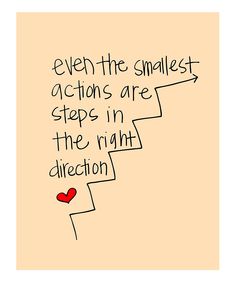
I have been telling all of the people who are feeling this way that a beginning to gaining some control over these feelings is to do ONE thing. It doesn’t matter what that one thing is, just do ONE thing. Whether that one thing be decompressing in the bathroom or your bedroom of your home when you arrive from work for even 5 minutes. Changing your clothes into something more comfy, washing your face, taking a 5 minute brisk shower, doing 5 minutes of meditation or journal writing BEFORE you engage with other people or things in your home. Just a brief break to gather yourself and your thoughts. And when this one thing is accomplished, recognize it and yourself for having done so. Say it out loud, I have done this one thing, I feel more calm, I can think more clearly.
Another ONE thing can be to take a break when you feel overwhelmed. This can be the most difficult for overwhelmed people to do. The feelings generally push harder on us to get these things done or manage this situation or deal with these people wanting our attention right now all at once. When you start to feel overwhelmed take a break. A break can be just going into another room and doing some deep breathing. A 5 minute or even a 1 minute meditation. Going outside and grounding yourself in nature. Lying on a bed or even the floor and grounding yourself with the 5 steps – What can you see, what can you hear, what can you touch, what can you smell, what can you taste. Wash your face or take a quick brisk shower. Go for a short walk around the place where you are. Color something or do some free writing and emotionally transfer your feelings out of you. One thing, just one thing, can change your mindset in seconds. Again, be sure to recognize the one thing you are doing and recognize what it does for your emotions and how that feels in your body.
If you are driving from school or work to home or somewhere else use the drive to decompress. Do some deep breathing while you are driving. Get into the being mode while driving and notice everything around you during the drive instead of going on automatic pilot and letting your thoughts dominate the drive. Put on some relaxing music or something you like to sing to. Do progressive muscle relaxation while you drive. Don’t spend the drive thinking about all the things that will confront you at your destination and things you cannot control.
Try it out today. Do ONE thing to redirect anxiety and overwhelming feelings. It does not matter what the one thing is just make sure to acknowledge it, notice it, pay attention to how it makes you feel and where you experience that emotion in your body. Do ONE thing every day that centers you.
The subconscious mind, which runs 95 percent of our lives, takes everything literally. Just as you say it. Just as you believe it. Regardless of whether it is true, the subconscious mind takes these things as fact. Once you put them into your mind and then allow them to plant themselves there, they will grow roots and spread just like weeds.
Is your mind full of weeds? If you find that you have negative automatic thoughts that constantly repeat and repeat in your mind, then the answer is likely yes. Mind weeds are the plants we allow to grow, have roots and spread and then they are always there.
These mind weeds can be the truth or they can be things we have told ourselves are true. If you question your automatic thoughts, you will find that many of them are not true. But the subconscious mind believes them. Sometimes our mind weeds can be so thick we cannot see what the real truth anymore. We come to think that we cannot get rid of them.
However, just as they appeared they can be replaced. And just as they took root with being repeated and repeated, we can repeatedly address them and replace them until they are changed. Pulling the weeds out one by one.
Just like we talk to the plants we grow in our houses and yards to help them flourish, we can talk to the weeds in our mind to remove them.
We all need a little motivation at times. Everyone has days that they struggle to be positive. Things that are difficult come to us all. In those times, it is sometimes helpful to have a little mindful motivation to use as positive affirmations to get us through the hard times. I hope that you find some helpful mindful motivation here today.
I hope you found some mindful motivation for your day here. If you feel you could use some other skills and tools for mindfully motivating yourself, I am accepting new clients (girls and women) for counseling. You can schedule an appointment by calling 406-413-9904 or email mindfulmontanawellness@gmail.com
So many times, people will say to me, everyone tells me to just be happy. The next thing they usually say is, I can’t just be happy. Which, is true, and then again, it isn’t true. They believe they cannot just be happy, and so they are not. But it is not true that they cannot just be happy, if they pay attention to the thoughts that dominate their minds.
I usually follow up with the question, why are you not happy? And 9 times out of 10, I get the answer, I don’t know. Which, is true, and then again, it isn’t true. If there are many negative, self-defeating, self-doubting, self-judging thoughts in their minds, they truly may not be able to pick just one and say, THIS is why I am not happy. But it isn’t true that they truly do not know any reason why they are not happy. People know why they are not happy. They know what they think. They know what thoughts they believe. Acknowledging these things however, is another story entirely.
The next time you find yourself feeling unhappy, stop, and examine the thoughts you have been thinking. Truly look at them. Writing them down is even better, that way you can actually see them. What are you thinking when you are unhappy? It’s not just, I’m unhappy. There were a lot of thoughts leading up to that point. Are the thoughts about yourself? Are they about how you see yourself compared to others? Are they about yourself in relationships? Are they about yourself and your work? Are they about yourself and your grades? Are they about yourself and your family? Notice, every one of those questions included yourself. Almost every negative thought we have includes us. We may say, I am unhappy because my mother expects me to be perfect and think that is only about our mother. It is about how we FEEL about what our mother is projecting onto us. It is about how we feel that we cannot be perfect or good enough. It is NOT about our mother. Every thought has to be examined for what it says about us.
And this is where the trouble comes. If we have to acknowledge that our unhappiness is because of what we think, feel, believe about ourselves and not about others or outside events, then we have to do work on ourselves. We always prefer to have others change, to have events change, but to have ourselves change, that is where we draw the line. And why do we do this? Because we are afraid of what happens if we do change. Because we live in fear.
If we want to just be happy, we have to just be willing to come to the truth of why we are not happy. Start by looking in the mirror and asking questions and really digging down to the bottom line – I am the reason I cannot just be happy and how do I change the only thing I can change – myself.
Until next time,
Deborah
I am currently accepting new clients (adolescent and adult females) for counseling. Please call 406-413-9904 or email mindfulmontanawellness@gmail.com to schedule an initial consultation.














 Mindful Montana Wellness, LLC Professional Counseling and Therapy Business Services